
Caves, swallow holes and turloughs
The Burren has almost no rivers on its surface. The rain sinks straight into the limestone and travels through a dark network of passages before it reappears.
Ground: Grassy and roughFrom Ballyvaughan: Ten to forty minutes by carWay in: By car around the BurrenBring: Waterproofs, boots, a torch for show caves
A landscape without rivers
Drive around the Burren after heavy rain and you will notice something missing. There are very few streams, and most of those you do see vanish within a short distance. The reason lies underfoot. Limestone dissolves slowly in rainwater, and over many thousands of years the joints and cracks in the rock have widened into fissures, shafts and passages. Water that would run across the surface in most landscapes here drops straight down and travels underground, sometimes for kilometres, before emerging at springs near the coast or under the sea in Galway Bay.
The result is a karst landscape, and the Burren is one of the best examples in Ireland. The grikes in the pavement are the first stage of the process; the caves are the deepest. Between them lie the swallow holes, sinking streams and seasonal lakes that make the region's water so unusual.
Swallow holes and sinking streams
A swallow hole is a point where surface water disappears into the ground. Some are obvious funnels in a field, others little more than a gap among the stones where a trickle vanishes. The clearest examples are on the shale-capped hills in the west of the Burren, such as Slieve Elva. Shale does not let water through, so rain gathers on these hills and flows off in small streams. The moment those streams reach the limestone below, they sink.
Pollnagollum, on the slopes of Slieve Elva, is the best known of these sinks. Its entrance leads into one of the longest cave systems in Ireland, explored over many decades by experienced cavers. The entrance shafts are dangerous and the passages beyond can flood rapidly, so this is ground for trained caving teams only, not for curious walkers.
The caves you can visit
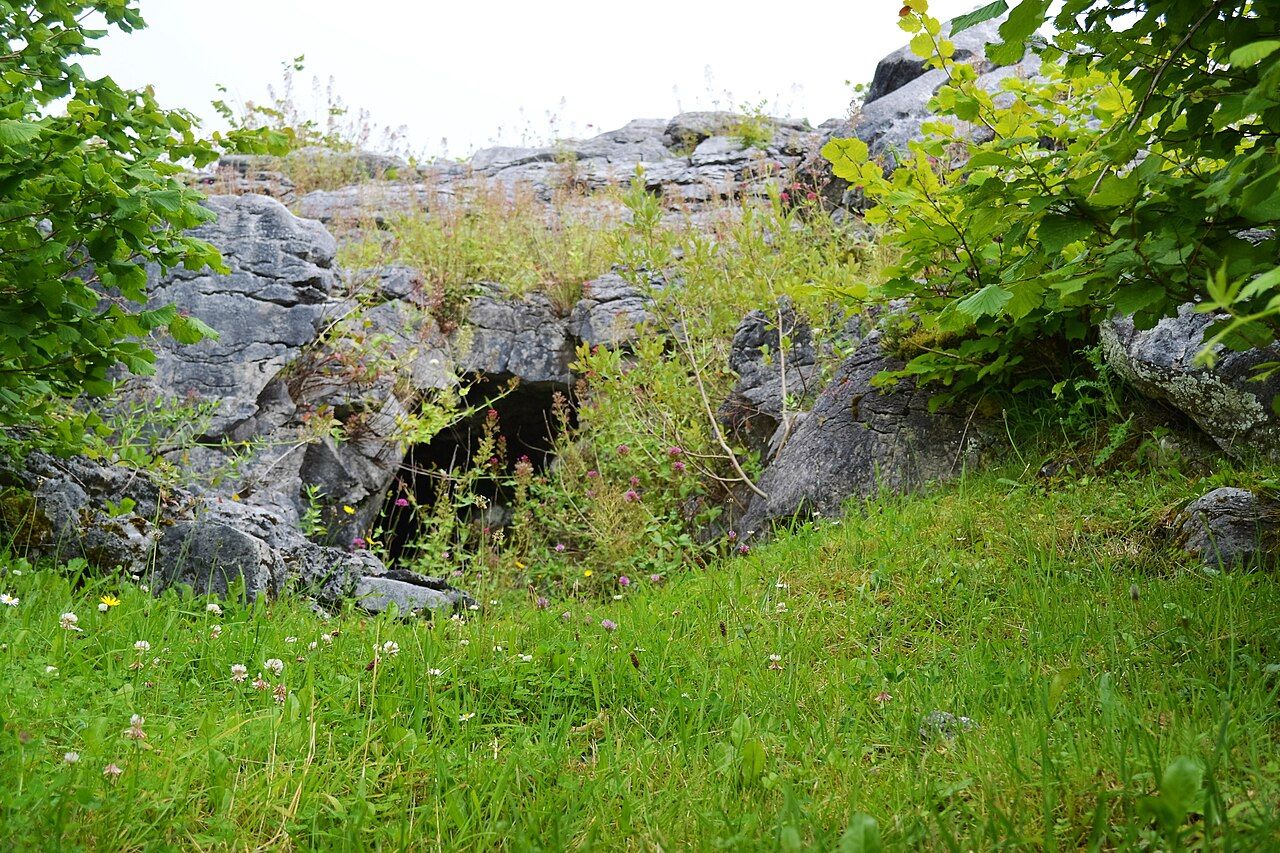
The easiest way to see inside the Burren is a show cave, where lighting, paths and guides make the experience safe. In the hills just south of Ballyvaughan, a show cave takes visitors along passages with stalactites, flowstone and the channel of an old underground stream, and its entrance area sits among grass and hazel on the hillside. The same slopes hold other openings in the rock that are not part of any tour and should be left alone.
Near Doolin, on the western edge of the region, the cave known as Poll an Ionáin holds one of the longest free-hanging stalactites known in Europe, a single column of calcite formed drop by drop over a vast stretch of time. It is shown to visitors on guided tours. The village and coast around Doolin are covered in Doolin and the view to the Aran Islands.
Nearby Winterage: cattle on the hills
Turloughs: the lakes that disappear
A turlough is a seasonal lake. The word comes from the Irish for a dry lake, and that is exactly what it is for part of the year. In winter, when the water stored underground in the limestone rises, it wells up through the floor of a hollow and floods it, sometimes in a matter of days. In late spring and summer the water drains away through the same openings, leaving a meadow where there was open water a few weeks before.
Turloughs are a rare habitat in Europe, found mostly in the west of Ireland, and the Burren has many of them. The broad basins in the eastern and central Burren, including the low ground around Carran, are good places to see how the land changes between seasons. Look for a dark band of moss on boulders and walls around the edges: it marks the level the water reaches in winter. The plants of turlough floors cope with months underwater followed by months of drought, a combination few species tolerate.
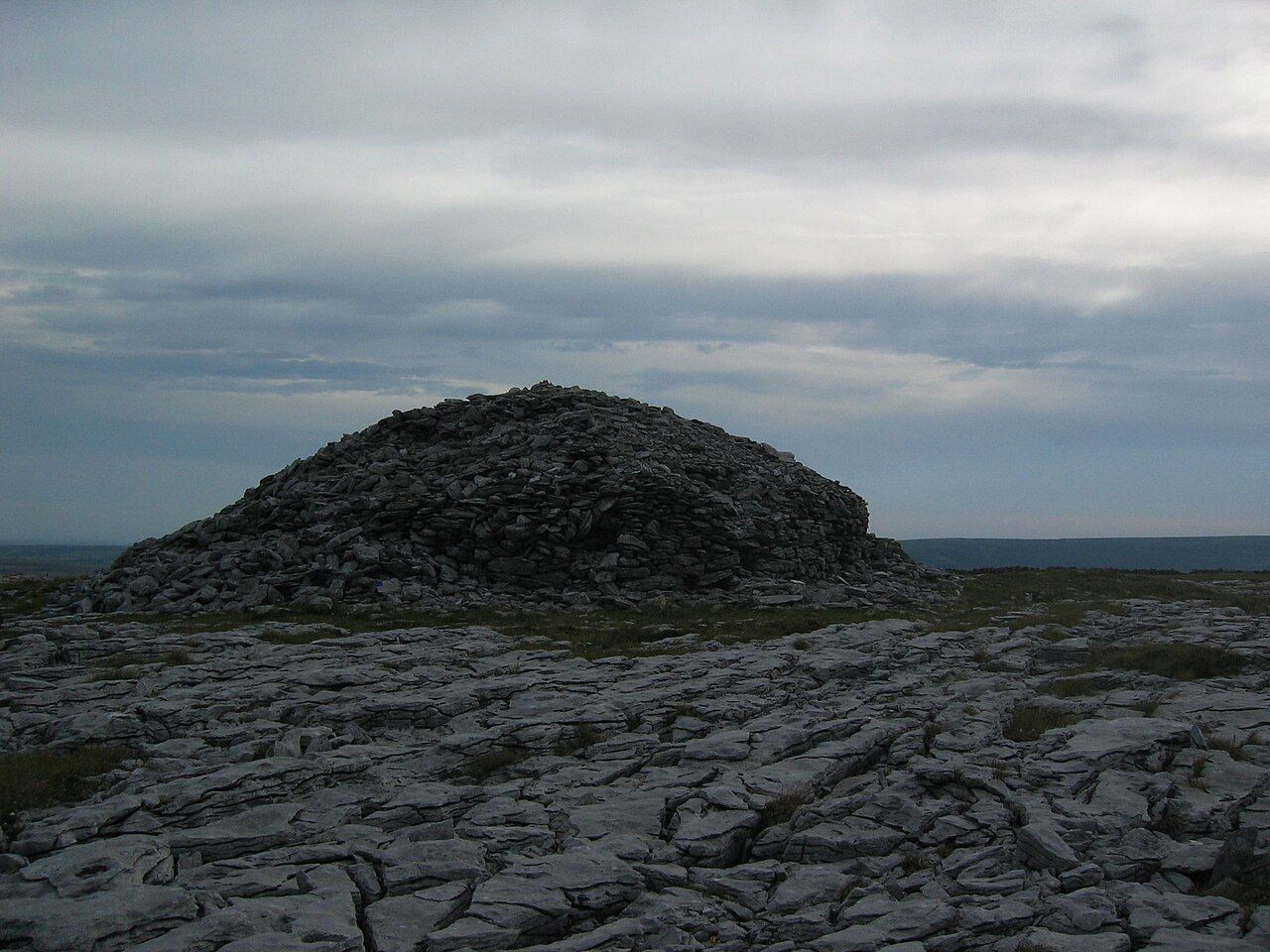
The name turns up in place names too. Turlough Hill, in the north-eastern Burren, carries a large ancient cairn on its summit, surrounded by pavement and wide views over the bay. Like every monument here, it should be left exactly as it is: add no stones and take none away.
In the national park, the lakes beside Mullaghmore also rise and fall with the seasons, and some of the hollows nearby behave as turloughs.
Water at the surface
Because water moves so freely through the rock, wells and springs have always mattered here. Many old farmsteads and ring forts sit near reliable water, and holy wells are scattered across the region. In the south-west, the spa town of Lisdoonvarna grew up around its mineral springs, described in the story of Lisdoonvarna. Along the north coast, fresh water from underground emerges at the shore, and in places it seeps out below the tide line.
All this has a practical consequence. Anything spilt on the surface can reach groundwater quickly, because the limestone filters little. Take your litter home, never empty anything into a swallow hole, and use proper facilities rather than the open hillside.
Cave safety
Caves are dangerous for the unprepared, and the Burren's are no exception. Passages can flood within minutes when rain falls on the hills above, sometimes when the sky over the cave entrance is still clear. Shafts drop without warning, rock can be loose, and a twisted ankle underground becomes a serious rescue.
- Never enter a wild cave unless you have caving experience, proper equipment and a group led by trained cavers.
- If you want to learn, contact a recognised caving club rather than going alone.
- Do not touch formations; the oils from a single hand can stop a stalactite growing.
- Leave bats undisturbed, especially in winter, when disturbance can kill them.
- Stay well back from open shafts and swallow holes, and keep children and dogs close nearby.
The underground Burren is best enjoyed with a guide and a hard path, and the surface tells its story too. Walk across the limestone pavement after rain and listen: sometimes you can hear water moving beneath your feet.