
Winterage: cattle on the hills
Most farmers bring their animals down from the hills for winter. In the Burren they do the opposite, and the flowers of spring depend on that old habit.
Ground: Grassy and roughFrom Ballyvaughan: The hills rise right behind the villageWay in: Upland roads and waymarked green roadsBring: Boots, warm layers, respect for gates and livestock
An upside-down tradition
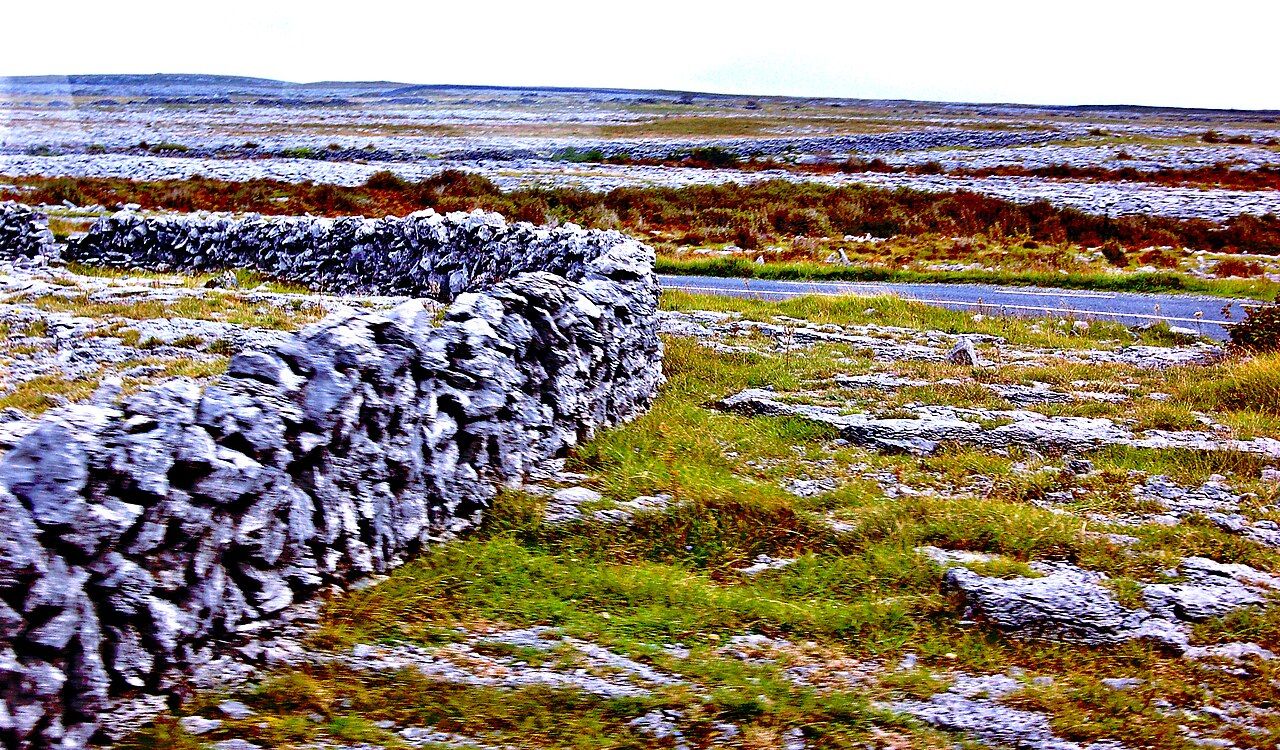
In many hill regions of Europe, livestock spend summer on high pasture and come down to the valleys before winter. In the Burren the pattern runs the other way. Each autumn, usually from around October, farmers drive their cattle up onto the limestone uplands, and the animals stay there through the winter months. In spring, often around April, they come back down to the lower fields. This seasonal movement is called winterage, and it has shaped the landscape for a very long time.
It sounds harsh, but the hills suit winter grazing better than you might expect. The limestone absorbs warmth and releases it slowly, so the uplands are often milder than they look. Grass keeps growing through much of the mild Atlantic winter. The thin soils drain quickly, which means firmer footing than in the heavy, waterlogged lowland fields, and fresh water is available from springs and troughs. The cattle are usually hardy suckler breeds, used to the conditions, and farmers check on them regularly and supply extra feed when the weather turns severe.
How cattle keep the flowers
Through the summer, grasses on the uplands grow long and coarse. Left alone, that growth would smother smaller plants, and hazel and blackthorn would gradually spread across the open ground. The winter cattle eat down the old grass, trample some of the dead material and slow the advance of scrub. By the time they leave in spring, the ground is open and the low-growing flowers have light and space.
That is why the celebrated displays described in the spring flowers of the Burren are not simply wild nature. They are the product of a partnership between plants, animals and people, sustained over generations. Where winter grazing has stopped, scrub has advanced quickly and the species-rich grassland has shrunk. Where it continues, the flowers persist.
The farmers' part
Burren farming is demanding work. Herding cattle across limestone pavement and steep terraces takes skill and patience, and maintaining water supplies, walls and access tracks on exposed hills is a constant job. Much of the knowledge involved has passed down through families: which parts of the hill hold shelter, where the water lies, how many animals a given area can carry without damage.
In recent decades, conservation programmes have worked with local farmers to support this kind of management. Rather than paying only for following fixed rules, some schemes reward farmers for the actual condition of their land, judged on things such as the variety of flowers and the control of scrub. The approach has drawn interest from far beyond Clare, and it reflects a simple idea: the people who know the land best are well placed to look after it.
In autumn, the movement of cattle onto the hills is marked locally by events celebrating the custom, usually around the end of October.
Nearby Reading the limestone pavement
Walls of every kind
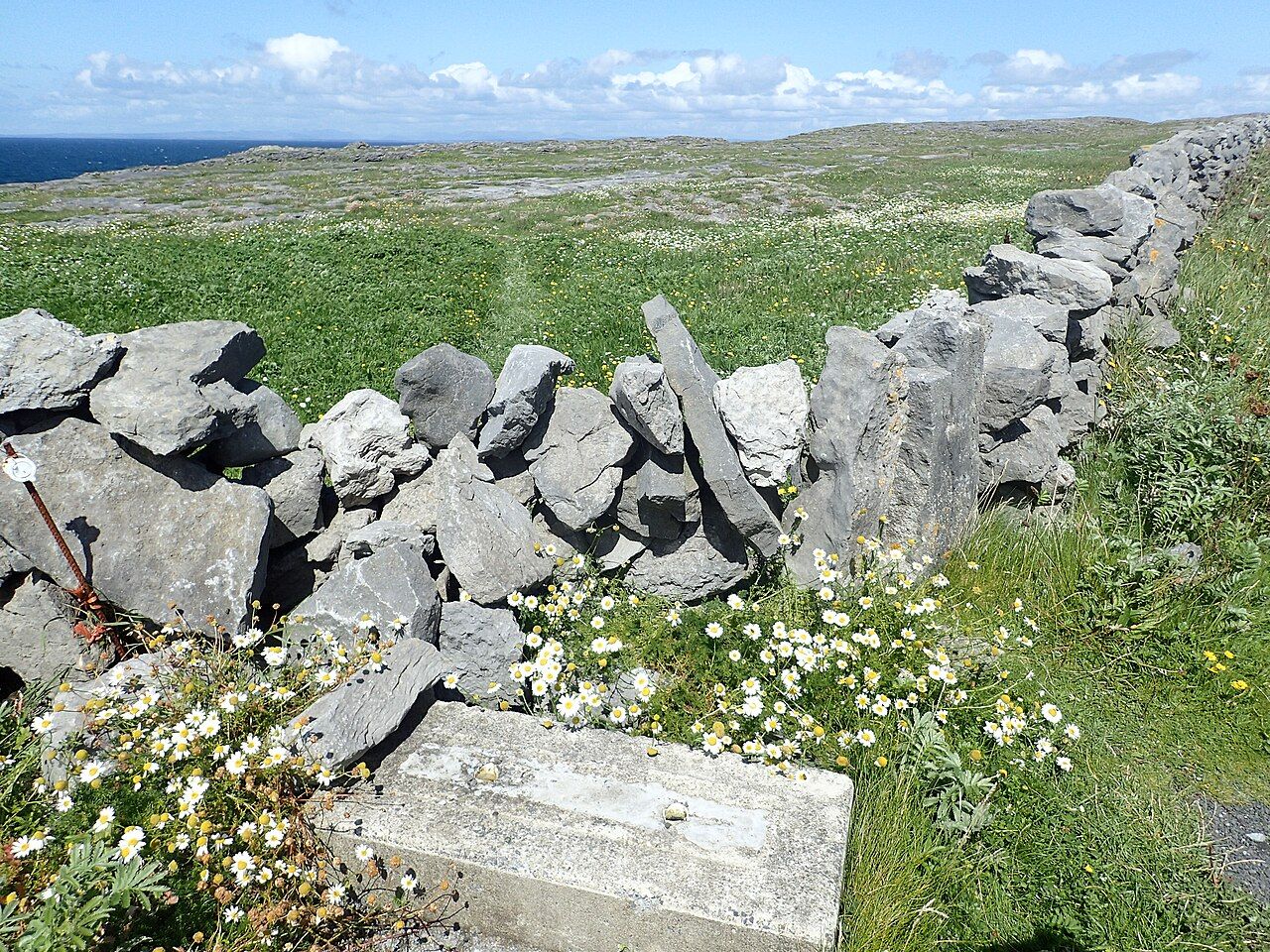
Stone walls are everywhere in the Burren, and they are part of the same story. Farmers cleared stones from the ground to make grazing and stacked them into boundaries. Some walls are built of single stones balanced one on another, so thin that daylight shows through the gaps; others are thick double walls packed with rubble; some use upright slabs set on edge. The styles vary from townland to townland and from one period to another, and archaeologists have identified field boundaries on the uplands that date back thousands of years.
Many walls stand without any mortar at all, held up by careful placement and the weight of the stones. They are surprisingly strong against the wind, yet fragile when climbed. A wall that took hours to build can be pulled down in seconds by someone scrambling over it.
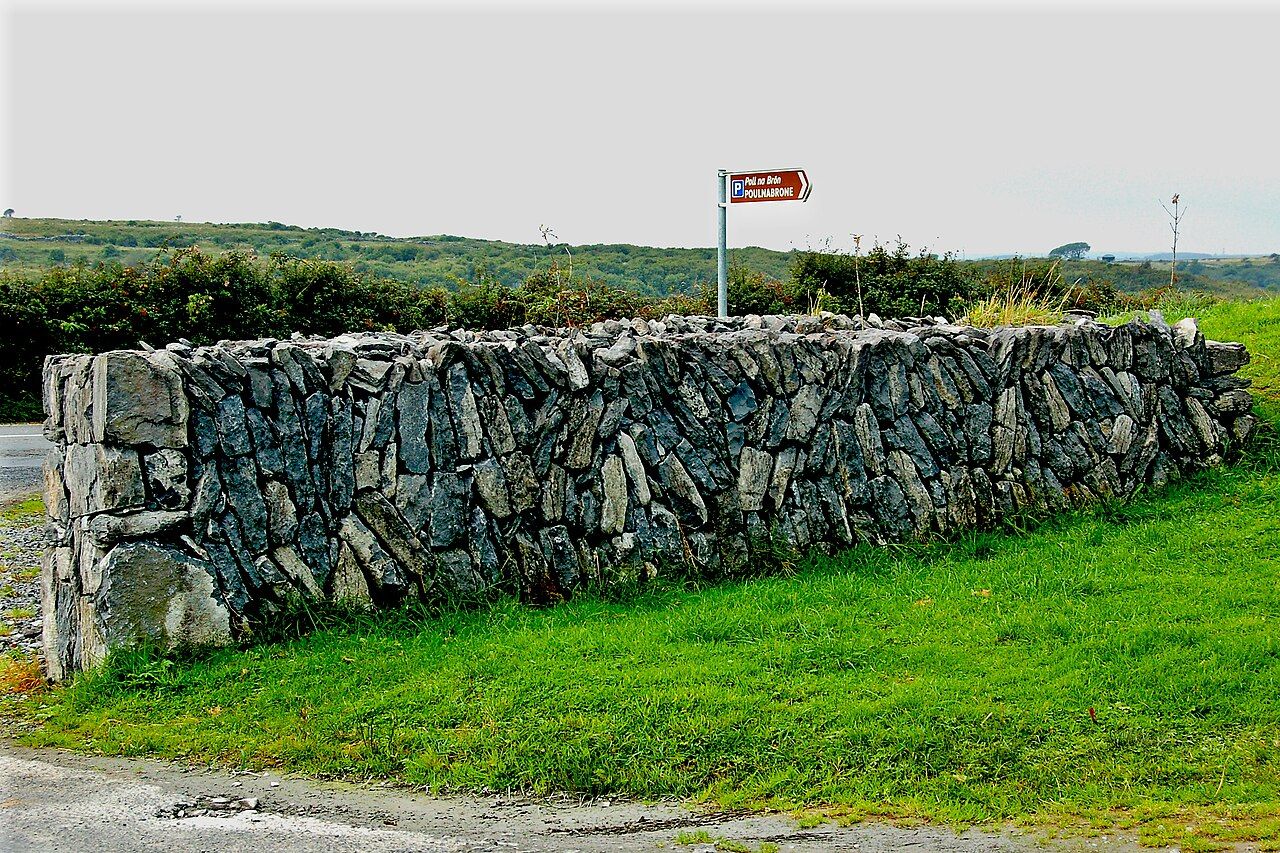
You will see a fine example near the parking area for Poulnabrone, where a well-built wall lines the roadside. Across the uplands, ruined walls, enclosures and old cattle shelters are worth looking for as you walk.
Walking among working farms
Almost all of the Burren is private farmland, and in winter the hills carry cattle. Walkers are welcome on waymarked routes and green roads, and the long-distance trail described in walking the Burren Way gives access to many upland areas. Off those routes, ask the landowner before crossing a field.
- A gate found shut stays shut behind you, and one found open stays open.
- Use stiles where they exist and never climb or lean on walls.
- Give cattle a wide berth, especially cows with calves, and never walk between a cow and her calf.
- Keep dogs on a short lead around livestock, and let go of the lead if cattle become threatening, so that you and the dog can each get away.
- Never move stones from walls or the pavement, and never build cairns.
- Do not feed or approach animals.
Seeing the winterage
Winter is a quiet time in the Burren, and it is a good season for walking if you are prepared for wind and rain. On a clear day in November or February, you may see small groups of cattle grazing high on the terraces, dark shapes on the pale rock, often with a view across Galway Bay behind them. Keep to the waymarked routes, bring warm layers and waterproofs, and remember that the days are short: plan to be off the hills well before dusk.
Spring brings the reverse journey. When the cattle come down, the hills seem briefly empty, then the gentians appear, followed by the avens and the orchids. Watching that change across a season is one of the most rewarding ways to understand the Burren, and it makes clear that the landscape belongs to the people who farm it as much as to the rock itself.