
Kinvara, Dunguaire and the boats
A harbour village at the head of a quiet inlet, a tower house on a rock by the tide, and the black-hulled boats that once carried turf across Galway Bay.
Ground: Shore and rocksFrom Ballyvaughan: Around twenty-five minutes east by carWay in: N67 east along the bay from BallyvaughanBring: Light layers, a camera, a tide table
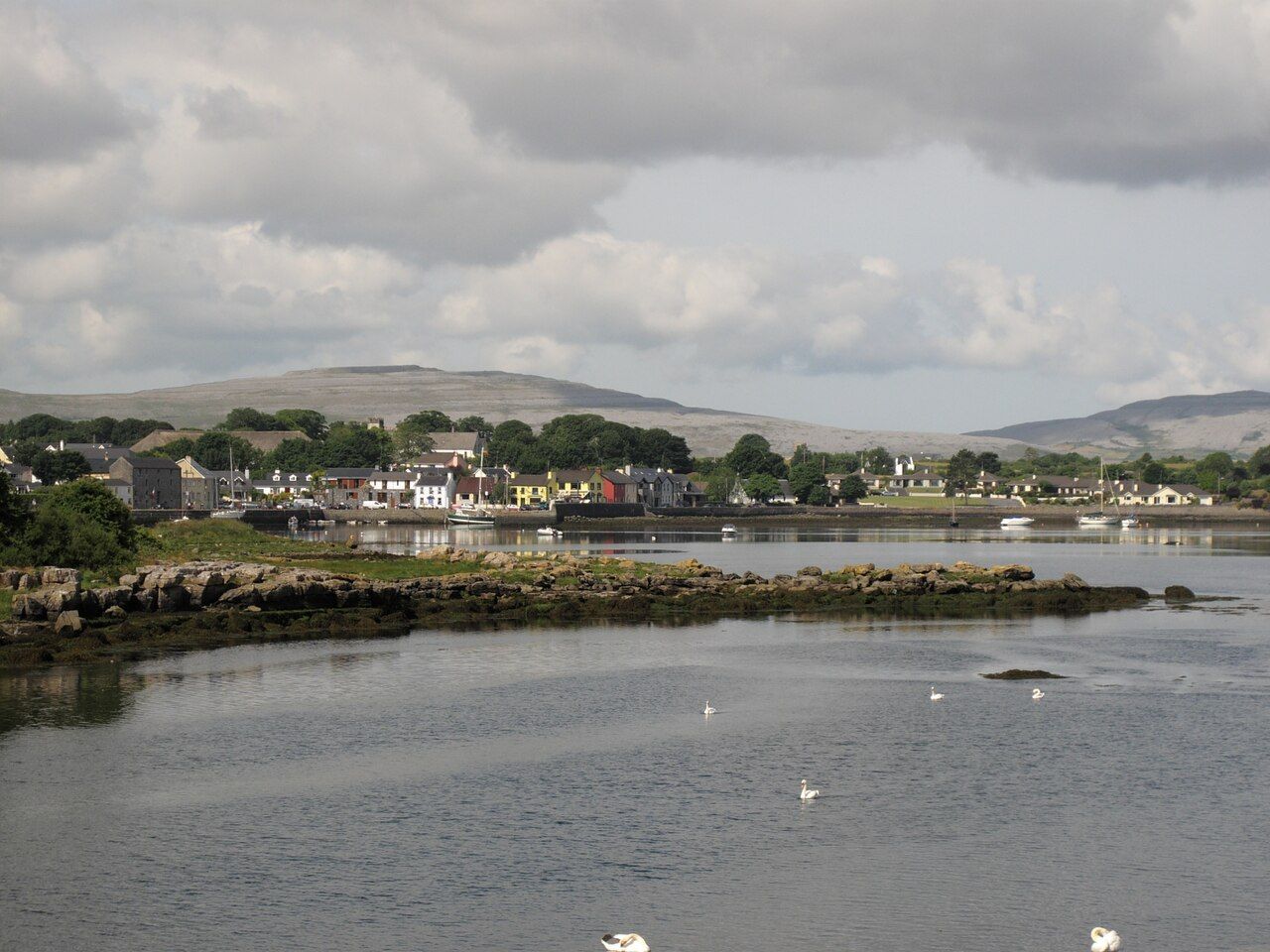
Follow the coast road east from Ballyvaughan, past the turn for the Flaggy Shore and the villages at the head of the bay, and you cross into County Galway. A little further on, the road drops to a sheltered inlet with a stone quay, a row of coloured houses and a castle on a rock at the water's edge. This is Kinvara, a harbour village that has looked out across Galway Bay for centuries.
The village and its harbour
Kinvara grew up around trade. Its quay sheltered boats that carried goods around the bay, and the village became a market centre for the farming land to the east and the limestone country to the south. The houses around the harbour reflect that history, with old warehouses and stores among the dwellings, many now converted to other uses.
The Irish form of the name, Cinn Mhara, is usually translated as head of the sea, which describes the place well. The village sits at the innermost point of a long inlet, where the salt water runs out of room, and from the quay you look straight down the channel towards the open bay.
Today it is a quiet place for much of the year, busier on summer weekends. Walk along the quay, look at the boats, and follow the shore paths out from the village. The tide makes a big difference here: at high water the inlet is a calm sheet of water; at low tide it becomes a wide expanse of mud, weed and rock, with wading birds feeding along the edges.
Dunguaire Castle
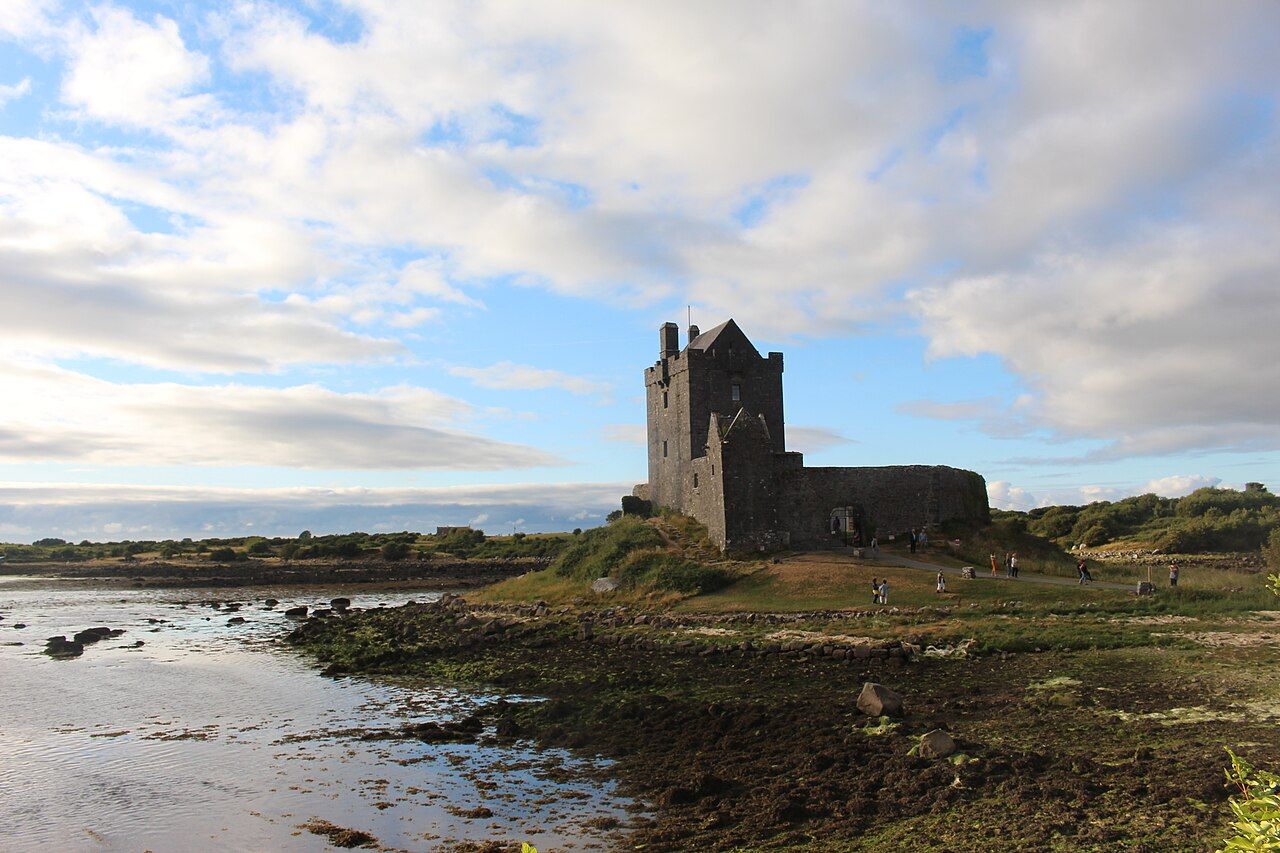
Just outside the village, on a small rocky outcrop by the shore, stands Dunguaire Castle. It is a tower house with a walled yard, built in the early sixteenth century by the O'Hynes family, who held land in this part of south Galway. The site is linked by tradition with Guaire, a king of Connacht in the seventh century famed for his generosity, and the castle's name is taken to recall him.
Over the following centuries the castle passed through several hands. In the twentieth century it was bought by a writer and surgeon who restored parts of it, and it became associated with figures of the Irish literary revival who visited the area. Later owners carried the restoration further.
The castle is often open to visitors in the warmer months. Even if you do not go inside, the walk around the outside and along the shore gives fine views of the tower against the water and sky.
Nearby Corcomroe, the abbey of the fertile rock
Light, tide and timing
Dunguaire is one of the most photographed castles in the west of Ireland, and for good reason. In the early morning or evening, the tower stands dark against a bright sky, reflected in still water at high tide. On grey days it looks stern and solid, a plain fortress on its rock.
- Check the tide times; reflections are best at high water, while low tide exposes weed and stones.
- The shore is uneven and slippery. Wear sensible footwear and take care near the water.
- Keep off walls and rocks that are clearly part of the castle's defences.
- Be aware of other visitors and traffic on the nearby road.
The traditional boats
Kinvara is closely tied to the traditional sailing boats of Galway Bay, usually called Galway hookers. These sturdy wooden boats, with black hulls and dark red-brown sails, once carried turf from the peat bogs of Connemara across the bay to villages like Kinvara, where wood and fuel were scarce.
The boats come in several sizes, from small open craft to larger decked ones, but they share the same deep, broad hull built to cope with the short, steep seas of the bay, and the same heavy sails that turn almost black when wet.
The trade has long since ended, but the boats themselves have been kept alive by enthusiasts who restore and sail them. Each summer, usually in August, Kinvara hosts a gathering of these boats, with races, music and celebrations on the quay. The scene, with the sails crowding the harbour and the castle behind, is one of the best sights of the year.
Walking around Kinvara
Several gentle walks start from the village. Paths along the shore lead towards Dunguaire and beyond, and quiet roads run inland towards the low hills. Much of the land is farmed, so keep to roads and marked routes, close gates, and keep dogs under control around livestock.
At low tide the inlet below the village is worth a slow look. Curlews, redshanks and other wading birds work the mud, herons stand motionless at the channel edges, and swans drift in on the rising water. Bring binoculars, stay off soft mud, and keep an eye on the tide, which can come in faster than it seems.
The village is also a good starting point for exploring the eastern edge of the Burren. Head south towards Corcomroe Abbey, or west along the bay back towards Ballyvaughan. Our guide to Ballyvaughan and Galway Bay covers the other end of the shore.
A loop along the bay
A pleasant day from Ballyvaughan might start with the drive east along the bay, a stop at the Flaggy Shore, then on to Kinvara for the quay and the castle. On the way back, turn inland to see the Cistercian ruin described in our guide to Corcomroe Abbey, before returning to Ballyvaughan by the coast. It is a gentle trip, mostly by water and green fields, a contrast to the bare uplands and a reminder that the Burren and its edges have many faces.