
Corcomroe, the abbey of the fertile rock
A grey Cistercian church in a sheltered valley near Bellharbour, with stone flowers carved on its capitals and a king lying in effigy by the altar.
Ground: Road and pathFrom Ballyvaughan: About fifteen minutes east by carWay in: N67 east, then a lane near BellharbourBring: Light jacket, walking shoes for Abbey Hill
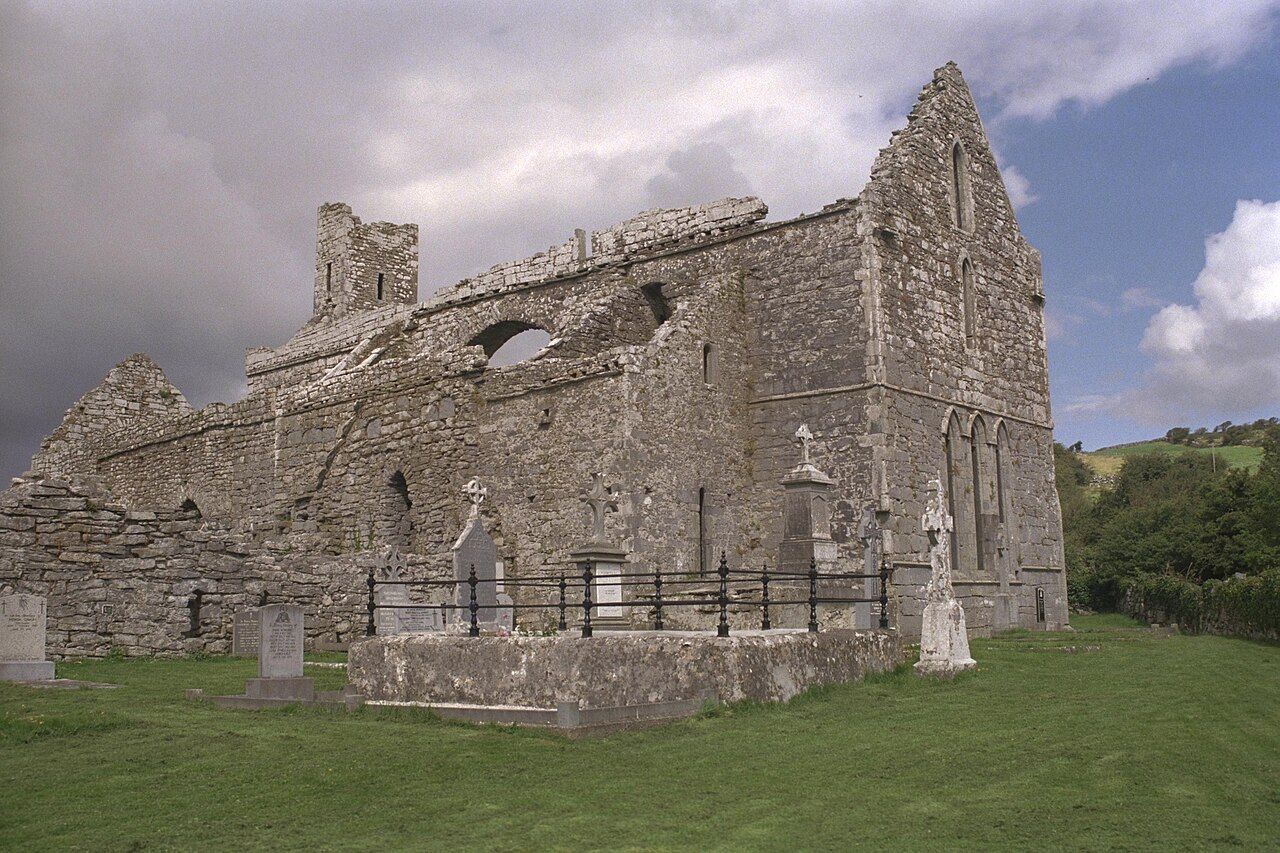
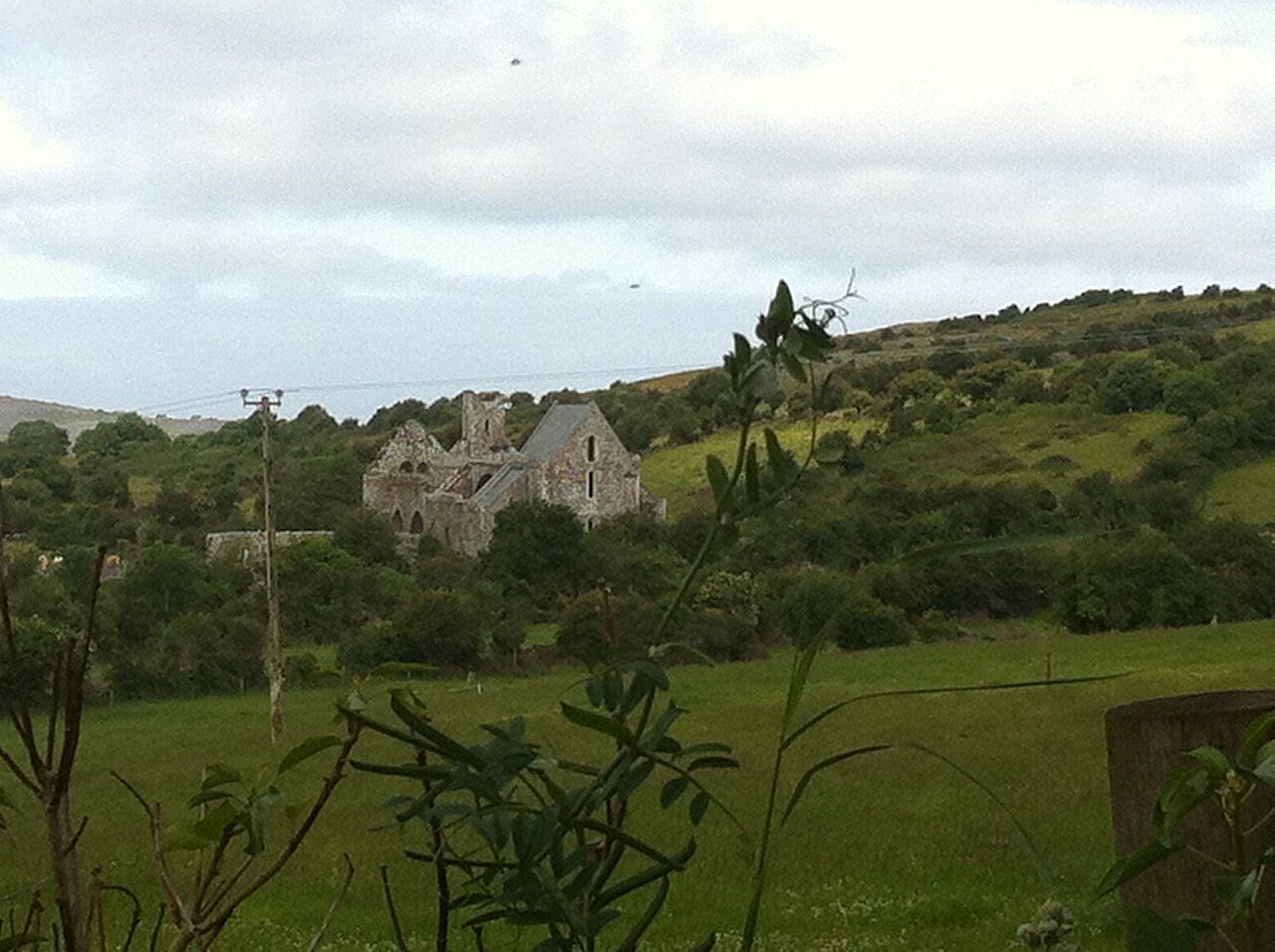
Leave Ballyvaughan heading east along the bay and, after the turn for Bellharbour, a narrow lane runs inland into a valley ringed by grey hills. At the end of it, in a green hollow surrounded by a graveyard, stands Corcomroe Abbey. From a distance it looks like one more ruined church. Close up it turns out to be one of the finest pieces of medieval stone carving in the west of Ireland.
A Cistercian house in the hills
The abbey was founded in the late twelfth century under the patronage of the O'Brien kings of Thomond, and it was settled by Cistercian monks. The Cistercians liked remote valleys with water and land to farm, and this one suited them well. Its Latin name is usually given as Sancta Maria de Petra Fertili, Saint Mary of the Fertile Rock, a name that anyone who has crossed the bare uplands above will understand. Down here the soil is deeper, the grass is greener, and the hills break the wind.
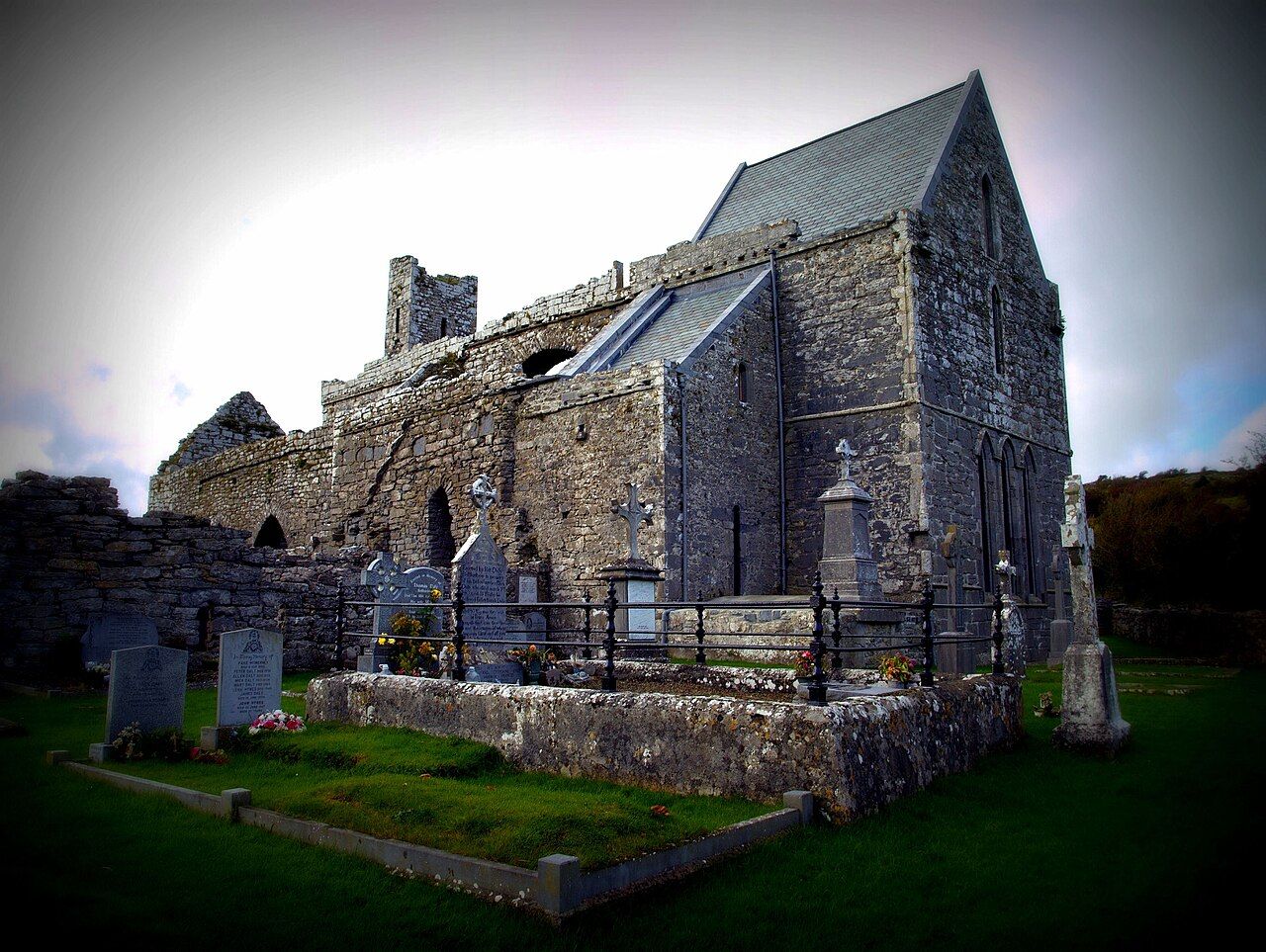
The monks lived by a strict rule of prayer, work and silence. Like other Cistercian houses, Corcomroe would have had a church, a cloister, a chapter house and ranges for sleeping, eating and work. Today it is mainly the church that survives, with traces of the other buildings to the south. The community declined in the later medieval period, and after the dissolution of the monasteries the buildings slowly fell into ruin.
The carved capitals
Walk into the church and go towards the east end, where the altar once stood. The chancel and the chapels beside it carry some of the best carving of their period in Ireland. Look up at the tops of the pillars and around the window openings, and you will find capitals carved with plants and flowers, along with a few human and animal heads.
Some of the flower carvings are often said to echo the plants of the Burren itself. Whether or not the masons meant them that way, it is pleasant to stand there in late spring knowing that the real flowers are coming into bloom on the hills outside. Our guide to the Burren's spring flowers covers what to look for.
The detail is fine and easy to miss in flat light. Come on a bright day, or late in the afternoon when sun reaches in through the openings, and give your eyes time to adjust. Take your time with each capital rather than trying to see them all at once.
The king in the north wall
In a recess in the chancel wall lies a carved stone figure of a man wearing a crown. The effigy is traditionally identified as an O'Brien king of Thomond who died in the thirteenth century and was buried here. The carving is worn, but the outline of the robe, the face and the crown are still clear.
Tomb effigies of this age are rare in the region, and this one gives a sense of how important the abbey was to the ruling family. Kings gave land, chose to be buried among the monks, and expected prayers for their souls in return. The graveyard around the abbey is still in use, so treat it as a place where local families come to visit their dead.
Nearby Kilfenora and the crosses under glass
Monument and graveyard
The abbey is open ground and you can walk in at most times, but think of it as both a monument and a working graveyard.
- Park where you will not block the lane or any gate; it is narrow and used by farm traffic.
- Do not climb on walls, window ledges or tombs. Old masonry is fragile, and falls happen.
- Keep voices low if a burial or a family visit is under way.
- Leave stones and carved fragments where they lie, even small loose pieces.
Because it is roofless in parts and stands in a valley, the abbey can be damp underfoot after rain. The grass inside the walls can be slippery, and there are uneven steps and old slabs to trip on. Sturdy shoes are a good idea.
Abbey Hill and the old roads
To the north of the valley rises Abbey Hill, a terraced limestone ridge between the abbey and Galway Bay. An old road climbs over its shoulder, now quiet and partly grassed over, and walkers use it to reach a high point with wide views across the water towards Galway and the hills of Connemara. On a clear day you can follow the bay as far as the Flaggy Shore and beyond.
The climb is steady rather than difficult, but the surface is rough and loose in places, and the top is exposed. Weather can close in quickly from the west, so carry a waterproof, check the forecast and turn back if visibility drops. The hill is farmed land; follow any waymarks, keep dogs on leads near livestock, and close gates behind you.
From the high ground you get a clear view of how the abbey's valley fits into the wider landscape: a green pocket held in a ring of bare grey terraces. It explains, better than any book, why monks chose the spot.
Around the valley
Corcomroe sits close to several other early church sites, including ruins on the slopes above the valley, and the whole area rewards slow exploring on foot. Many paths cross private land, so use waymarked routes and ask before going off them.
The abbey also combines well with the coast road. Continue east to the harbour villages at the head of the bay, or round to Kinvara and its castle on the shore. Coming back to Ballyvaughan in the evening, with the light low over the water, rounds off the day.