
Walking the Burren Way
A waymarked trail across limestone hills, green roads and quiet lanes. How it is laid out, how to follow it and how to stay safe in changeable weather.
Ground: Grassy and roughFrom Ballyvaughan: The trail passes through the villageWay in: The trail passes through Ballyvaughan villageBring: Boots, waterproofs, map, food and water
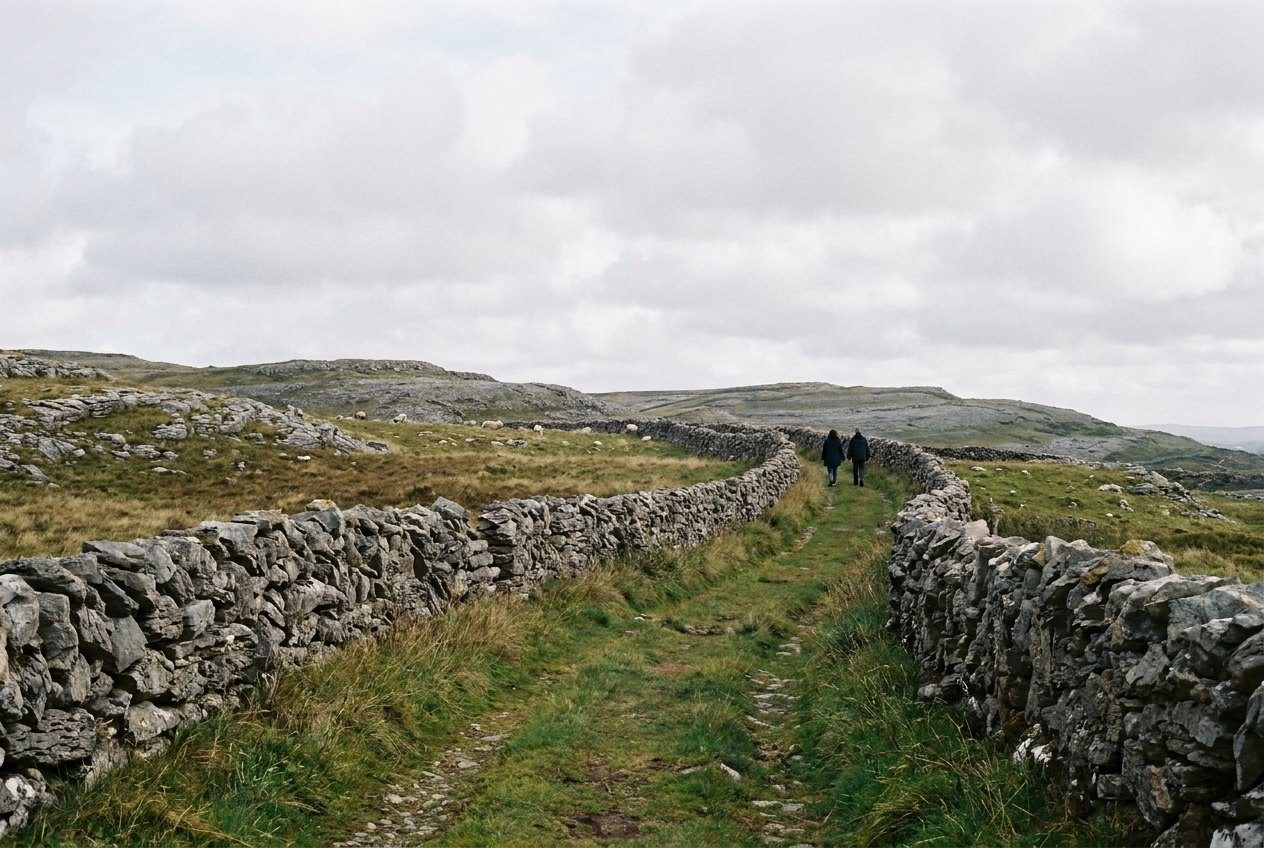
Many visitors see the Burren from the car, stopping at viewpoints and monuments along the way. To feel the place properly, though, you need to walk it. The Burren Way is a long-distance waymarked trail that does exactly that, following old green roads, quiet lanes and farm tracks across the hills and down to the coast. You can walk it all over several days, or pick out a single stage for a long day out.
How the route is laid out
The Burren Way runs for more than a hundred kilometres in total, linking the Atlantic coast with the limestone uplands and the farmland to the south. It passes through Ballyvaughan and reaches south and east towards the Corofin area. Over the years sections have been added, changed and rerouted, so the exact line and distances vary between maps and guides.
Distances on paper can mislead. A stage that looks modest on the map may take far longer than expected once you add climbs, rough pavement, stiles and stops to look around. Allow generous time, especially on the higher ground, and plan to finish well before dark.
The trail is usually walked in stages of a day each, with villages at the ends or nearby. The sections near Ballyvaughan take in some of the finest high ground in the northern Burren, with views over Galway Bay. Further south, the route moves through quieter farmland and on to the lakes and fields at the edge of the limestone, described in our guide to Corofin and the lakes.
Green roads
Some of the best walking on the Burren Way follows green roads: old unpaved tracks between stone walls, now covered in grass. Many were built or improved in the nineteenth century, some as famine relief works, others as routes for moving cattle and goods between farms and markets. They follow the contours of the hills, which makes for steady walking with wide views.
The green roads are a joy in spring and early summer, when the verges and nearby pavement are full of flowers, and our guide to the spring flowers will help you name them. In autumn and winter they are quieter, and the light on the grey hills can be magnificent.
Following the waymarks
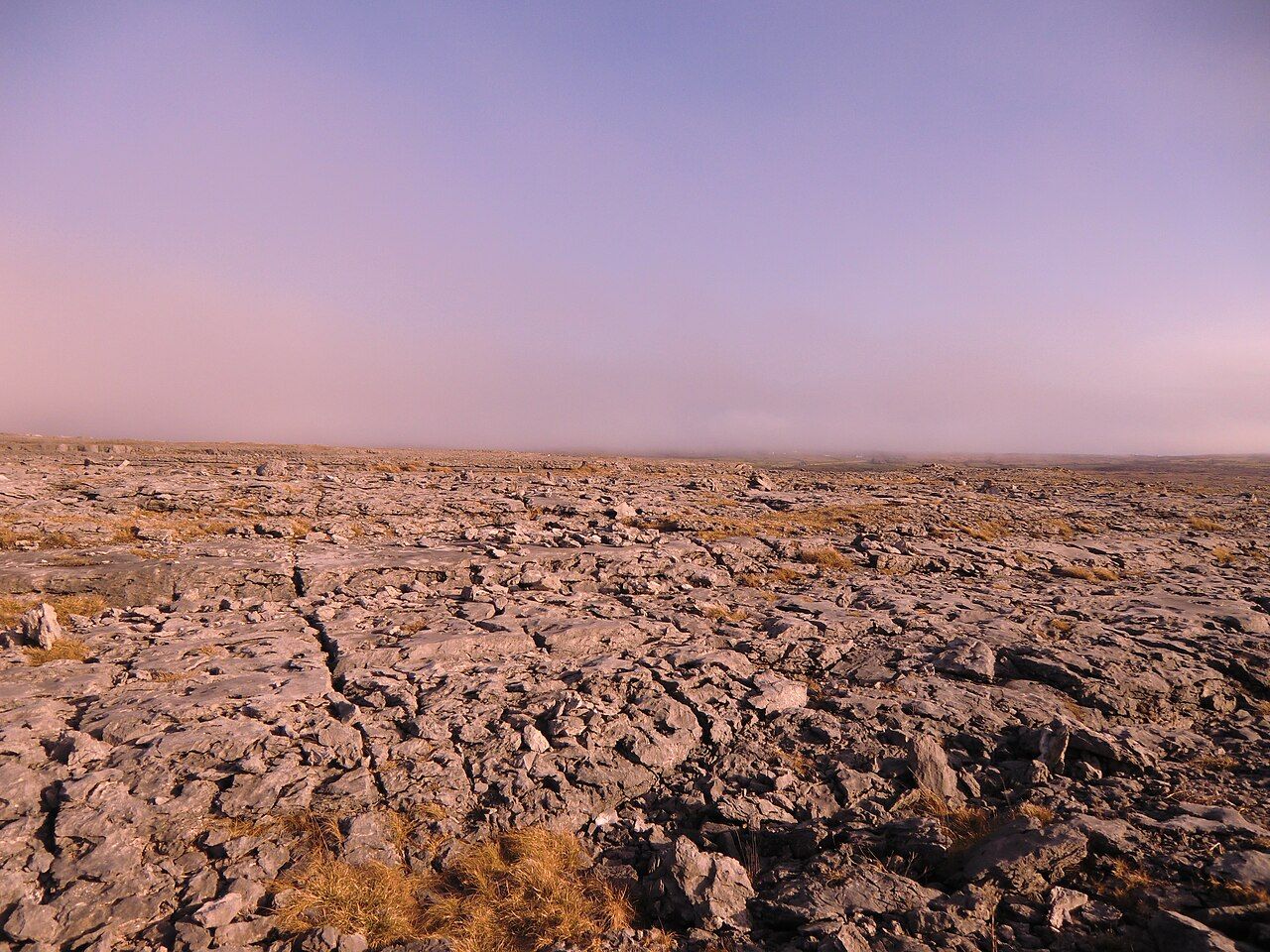
Like other national waymarked trails in Ireland, the Burren Way is marked with black posts carrying a yellow arrow and a small walking figure. They are placed at junctions and at intervals along the route. On open ground, where the path may be faint, they are your main guide.
- Look for the next post before you leave the last one, especially on bare rock where paths are hard to see.
- If you have not seen a waymark for a while, stop and check your map rather than pressing on.
- Carry a paper map and a compass, and know how to use them. Phone signal can be patchy, and batteries die.
- Waymarks can be damaged or moved; do not rely on them alone.
Nearby Mullaghmore and the national park
Respecting the land
Most of the Burren is farmed private land, and the Burren Way exists thanks to agreements with landowners. Respect that by staying on the waymarked route and following a few simple rules.
- Close gates behind you, unless they are clearly meant to be left open.
- Do not climb walls; use stiles and gates. Dry-stone walls collapse easily and are slow to rebuild.
- Keep dogs on leads near livestock; some sections do not allow dogs at all.
- Never pick flowers, move stones or build cairns.
- Take all your litter home with you.
Some stretches pass close to farmyards and houses. Walk through quietly, keep to the line of the track, and remember that the people who live here are at work while you are on holiday.
Cattle graze many uplands in winter, following the old practice described in our guide to the winterage. Give them space, walk calmly around them, and do not come between a cow and her calf.
Weather and safety
Weather on the Burren can change quickly. Fog rolls in from the Atlantic, rain sweeps across the hills, and wind on the high ground can be strong even when the valleys feel calm. Limestone is slippery when wet, and the cracks in the pavement can catch an ankle.
- Check the forecast before you start, and be ready to change plans.
- Wear sturdy boots with good grip; trainers are not enough on rough rock.
- Carry waterproofs and warm layers, even in summer.
- Take enough food and water for the whole day; shops can be far apart.
- Tell someone your route and when you expect to finish.
Winter days are short in the west of Ireland, and the light goes quickly once the sun drops behind the hills. Carry a head torch outside the summer months. If fog comes down on open ground, stop, take a bearing, and move carefully from one known point to the next rather than guessing.
Planning your walk
If you are walking the whole trail, plan your stages and transport in advance. If you only have a day, a section near Ballyvaughan gives a fine introduction, with green roads, limestone hills and views across the bay. Combine it with a visit to Poulnabrone or the forts nearby, and you have a full and rewarding day.
Walking slowly, you notice things the road hides: the patterns in the rock, the small fields tucked between walls, the flowers in the grikes, the sound of larks overhead. That, more than any single view, is what the Burren Way offers.