
Ballyvaughan and Galway Bay
Where the green valleys of the northern Burren meet the sea, Ballyvaughan sits beside a small quay with the grey hills behind and Galway Bay spread out in front.
Ground: Road and pathFrom Ballyvaughan: A short walk along the shoreWay in: N67 from Galway or LisdoonvarnaBring: Waterproof, binoculars, walking shoes, tide times
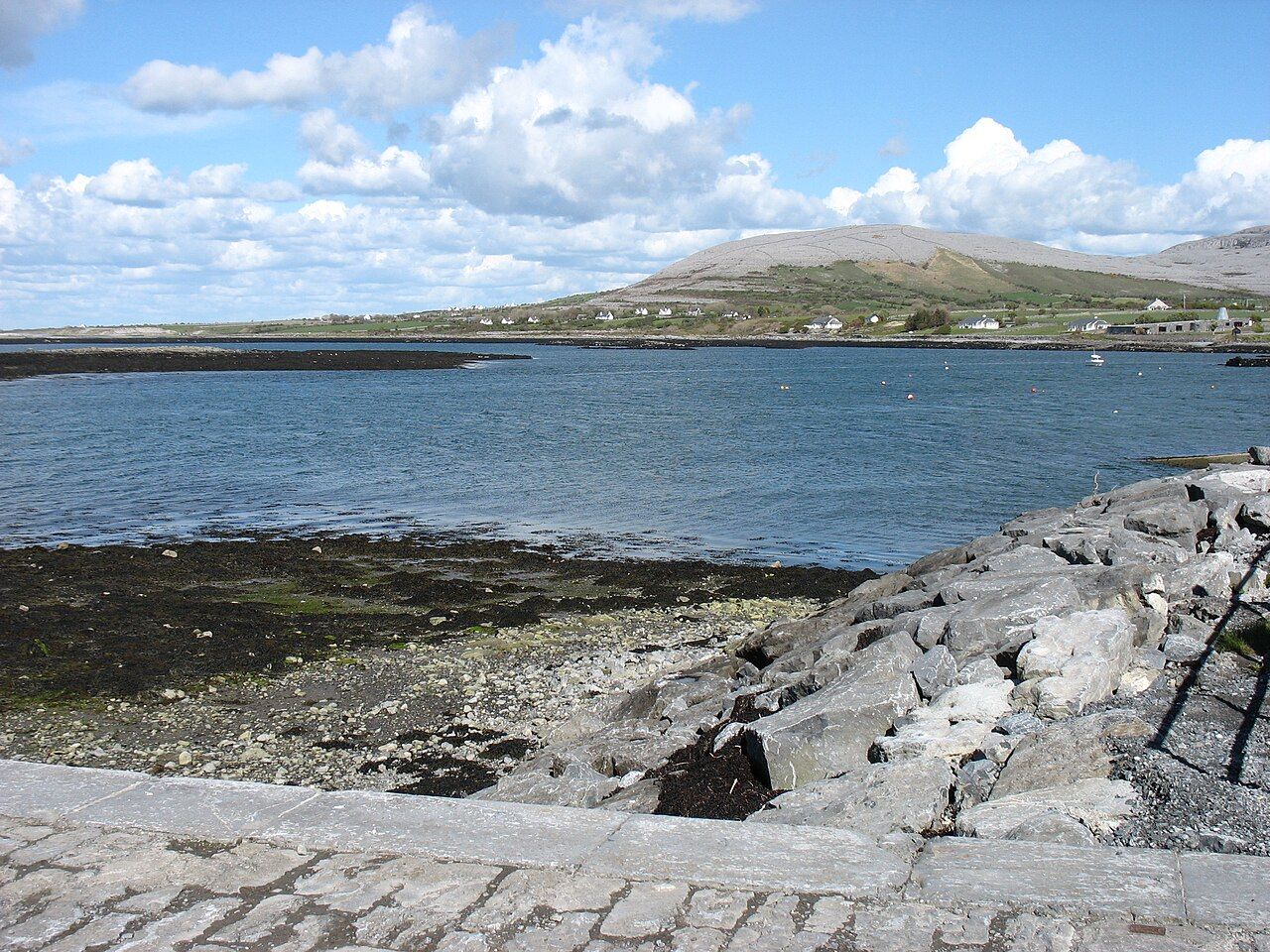
A village between hills and sea
Ballyvaughan grew up where several valleys come down out of the northern Burren to meet Galway Bay. Behind the village the limestone rises in terraced grey hills; in front, the water opens out towards the far shore of the bay. That setting gives the place its character. You can stand at the quay, look south to bare rock and look north over the sea, all from the same spot.
The village is small, spread along a few roads, with a mixture of older houses, newer homes and the services a rural village needs: shops, places to eat and drink, and a few practical businesses. Its Irish name is Baile Uí Bheacháin. For walkers and slow travellers it has an obvious advantage: almost everything that makes the Burren famous lies within a short drive, and some of it can be reached on foot.
For a long time the village lived from farming and from the traffic of the bay, and the older stone buildings near the water still hint at that working life. Visitors now account for much of the activity in summer, while in winter the place returns to a quieter rhythm set by farms, schools and the weather. Out of season you may have the quay almost to yourself, with only the gulls and the wind for company.
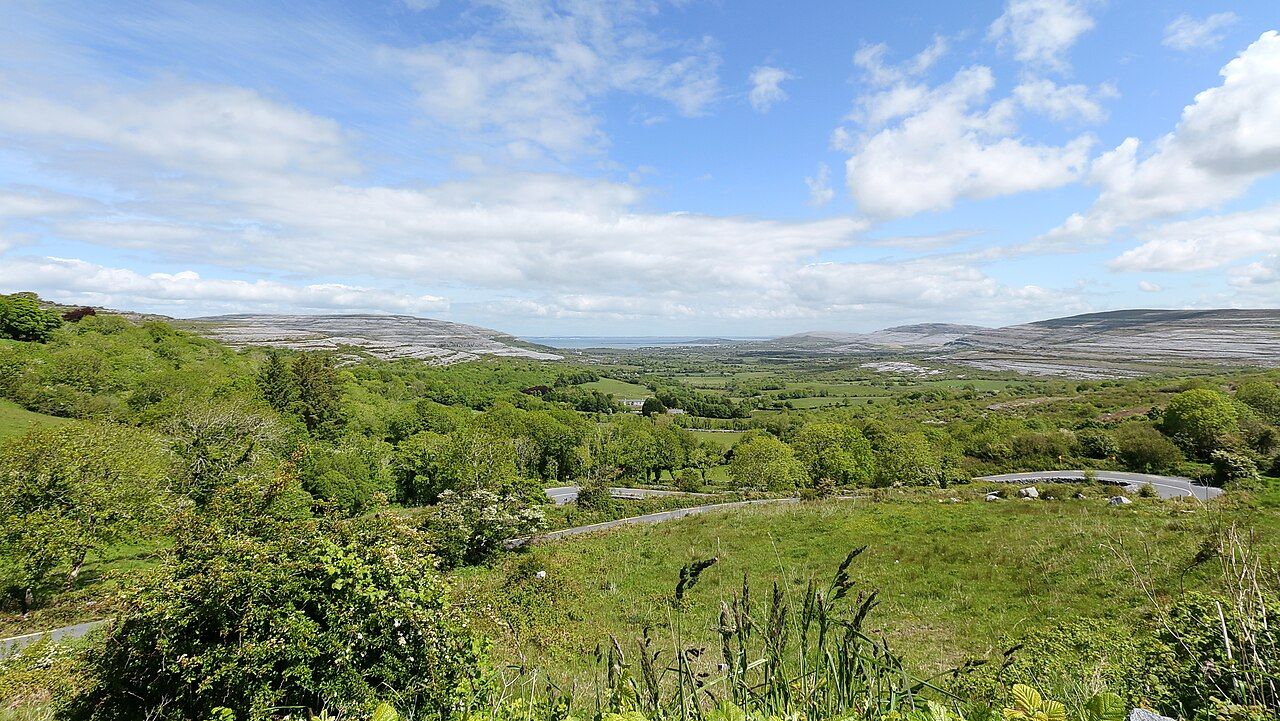
The quay and the old harbour
The stone quay is the natural place to start. Built in the nineteenth century, it once served a busy trade across the bay. Boats carried goods between the Burren and the far shore, and turf from Connemara, a scarce fuel in a landscape of bare limestone, was among the cargoes brought over by sea. Today the harbour is quiet, used by a few small boats, and the quay is more a place for a stroll and a view than for commerce.
Walk out along the quay wall and look back at the village, then out across the water. On a calm day the bay can be flat and silver; when the wind is up, waves slap against the stones and spray blows across the top. The views change completely with the light, and they are worth seeing at different times of day.
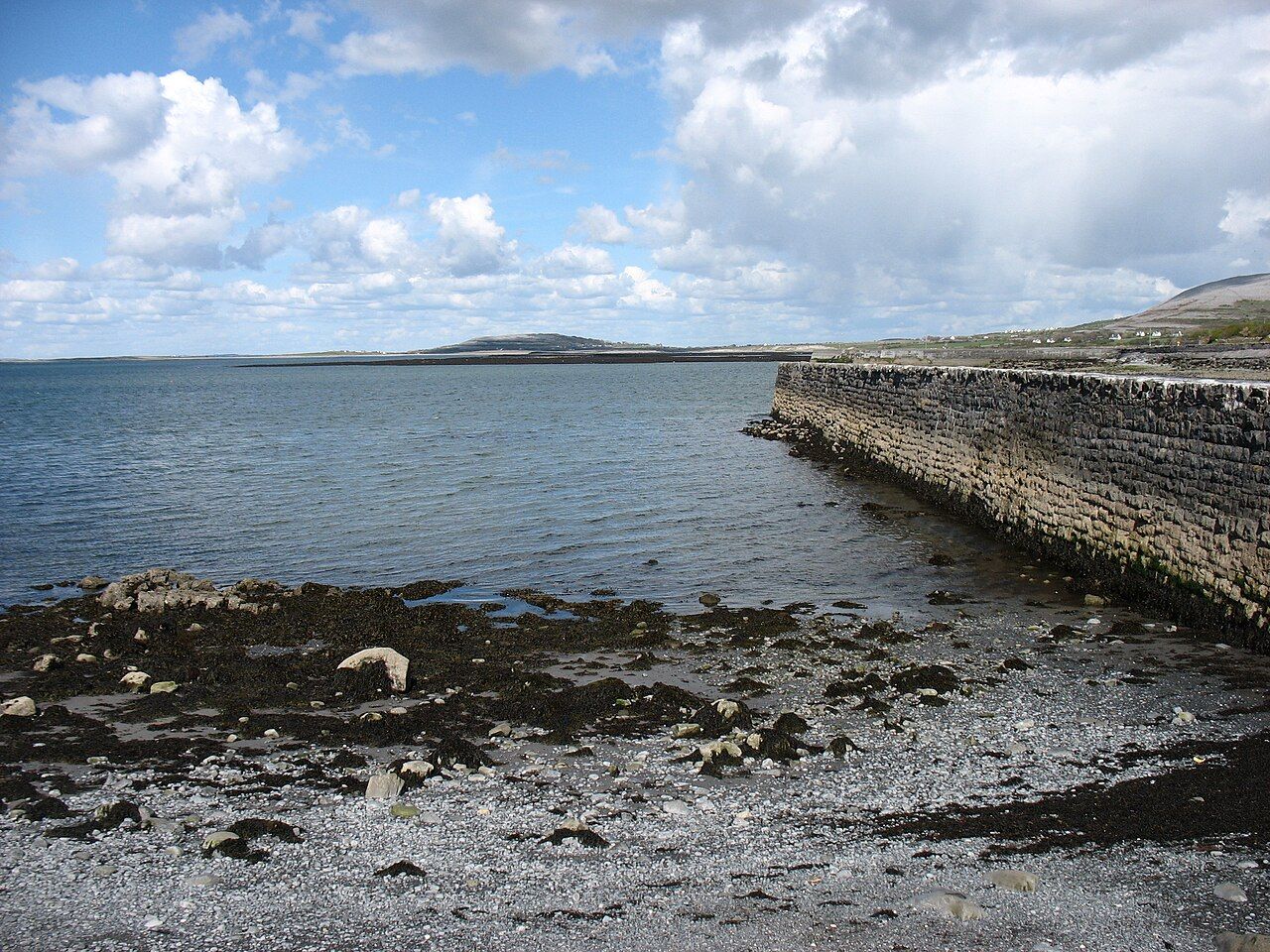
Tides and the shore
The tide shapes the shoreline around Ballyvaughan more than you might expect. At high water the bay comes right up to the walls and the shore looks neat and full. At low water a broad stretch of mud, sand, stones and seaweed is exposed, and the harbour can look almost empty. Neither is better; they are simply two different places.
Low tide is the best time for shorebirds. Oystercatchers, curlews, redshanks and herons feed along the exposed mud and weed, and in winter brent geese often graze along the edges of the bay. Bring binoculars and keep your distance so the birds can feed undisturbed. If you walk out on the foreshore, check the tide times first, keep track of the rising water, and stay off soft mud, which can be deeper than it looks.
Low tide is the best time for shorebirds.
The weather on Galway Bay changes quickly. A bright morning can bring heavy showers by midday and clear again by afternoon, and the wind off the water is often colder than the temperature suggests. A waterproof and a warm layer belong in your bag every day of the year.
Nearby Black Head lighthouse and Fanore beach
Views across the bay
From the shore around Ballyvaughan you look north across Galway Bay. On clear days the far side comes into focus: the low coast of County Galway and, further west, the hills of Connemara. In the evening, lights appear along the far shore, and the bay fills with soft colour as the sun drops towards the Atlantic in the west.
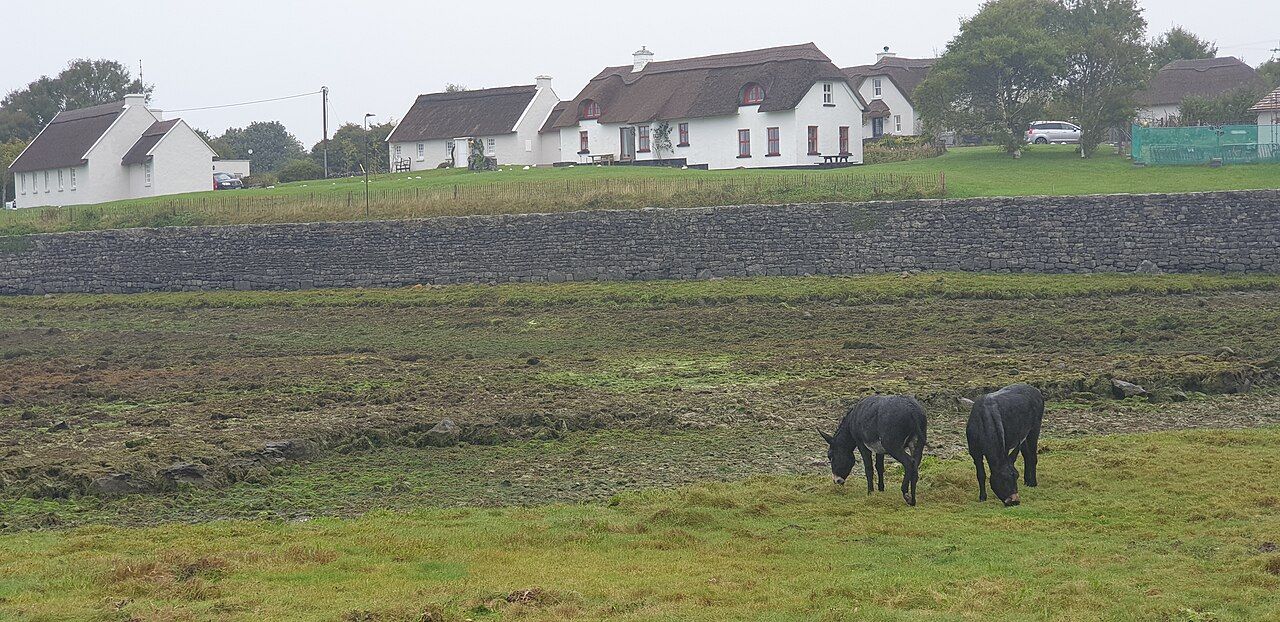
For a wider view, climb a little. The road south up the side of the valley gives a fine outlook back over the village and the bay, and the zigzag road described in Corkscrew Hill and the Burren roads is famous for the panorama from its upper bends. The waymarked routes on the slopes behind the village offer similar views on foot, with the terraced limestone underfoot and the sea spread out below.
Short walks from the village
You can fill a day without the car. A walk along the shore road to the quay and back takes in the bay, the harbour and the fields that run down to the water. West of the village, the coast road leads towards a small beach and then on to the open coast; take care on this stretch, since the road has little room for walkers and traffic can be fast.
The waymarked trails that start near Ballyvaughan climb onto the hills, following old green roads between stone walls with the bay below. Sections of the long-distance route covered in walking the Burren Way begin in this area, giving access to the uplands without crossing private land. Wherever you walk, keep to marked routes, close gates as you found them, and ask before crossing a field.
A short distance from the village, a restored round tower house stands near the road south, and further west, on the coast road, the ruin of another tower house looks out over the water. Both belong to the wider story of fortified houses told in Leamaneh and the tower houses.
A base for the Burren
Ballyvaughan sits at a junction of roads that lead to most of the region's best-known places. The coast road runs west round Black Head to Fanore and the Atlantic shore. The road south climbs into the high Burren and on towards Lisdoonvarna and Doolin. Another route heads south past the great dolmen described in Poulnabrone portal tomb and on to the castles, churches and lakes of the south. To the east, the coast road follows the bay towards the Flaggy Shore, Kinvara and Galway city.
None of these trips is long, which means you can choose by the weather. On a clear morning, head for the hills or the coast; if the rain sets in, visit a ruin, a church or a village and save the open ground for later. Returning to the bay at the end of the day, with the hills dark behind and the water catching the last light, is one of the quiet pleasures of staying here.
- Check tide times before walking on the foreshore.
- Carry waterproofs and a warm layer in every season.
- Keep to waymarked routes on the hills and respect private farmland.
- Drive slowly on the narrow roads and pull in to let others pass.