
The Flaggy Shore
A narrow lane runs between a quiet lake and wide shelves of limestone on Galway Bay, and in autumn the light here can make the whole shore glow.
Ground: Shore and rocksFrom Ballyvaughan: About twenty minutes east by carWay in: East from Ballyvaughan, then New QuayBring: Light boots, binoculars, a warm layer
Where it is
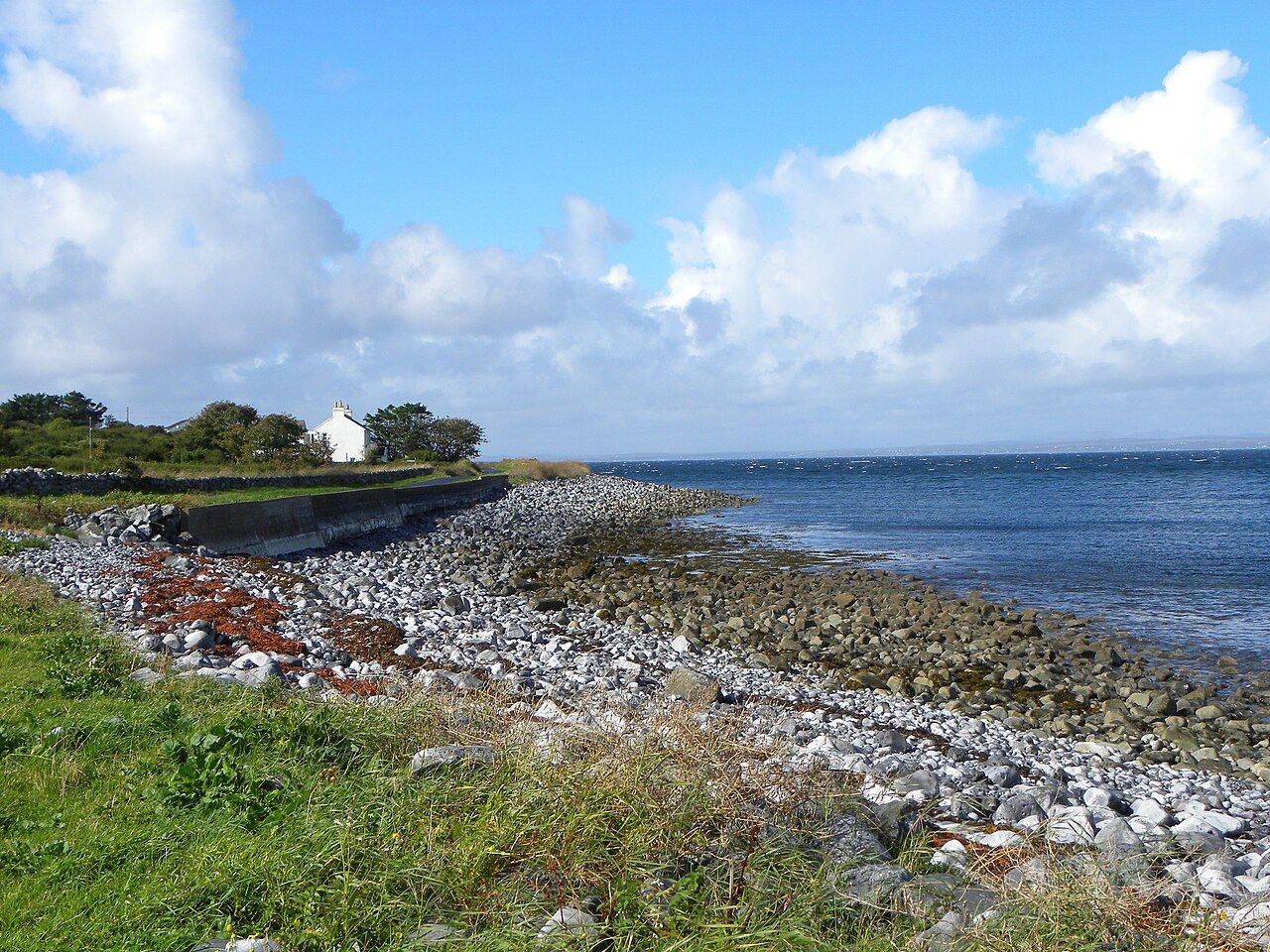
The Flaggy Shore lies on the northern edge of the Burren, where the land runs out into Galway Bay near the small settlement of New Quay. From Ballyvaughan you head east along the coast road towards Kinvara, then turn north for New Quay and follow the lane west along the water. The shore takes its name from the flat slabs of limestone, or flags, that form much of the coastline here, stepping down into the sea in broad, pale shelves.
The setting is simple: the lane on one side, the shore on the other, and in places a narrow strip of grass and stones between them. Behind the lane lies Lough Muree, a lake separated from the bay by a low bank of shingle. Further west the shore swings round towards Finavarra Point, with views across the bay in several directions.
The shore itself
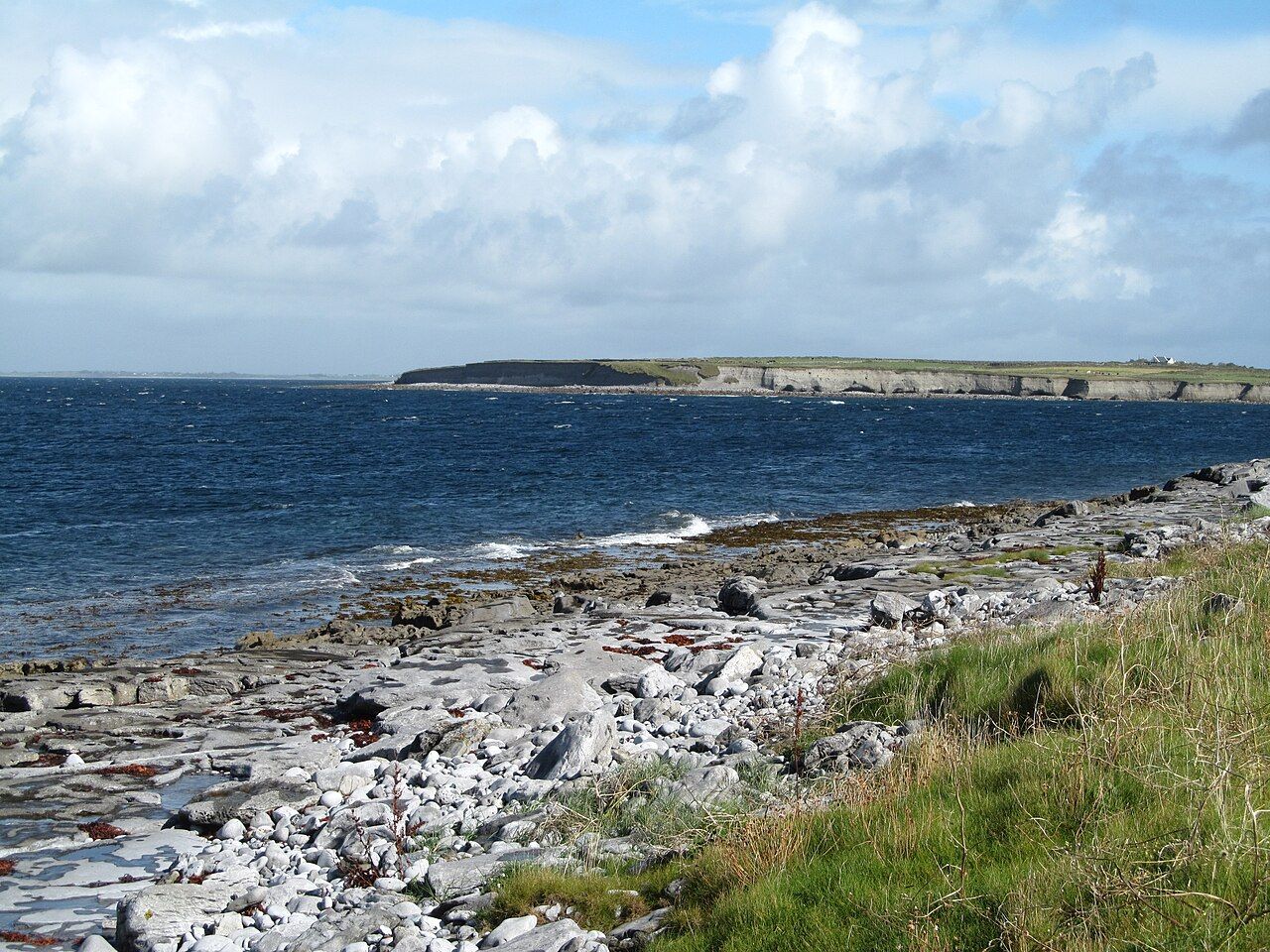
The limestone here belongs to the same beds that form the hills inland, and walking on it is a reminder that the whole Burren was once a seabed. The flags run in long terraces into the water, cut by fissures and littered with rounded boulders. At low tide more rock is exposed, with pools holding seaweed, small fish and crabs. At high tide, especially in a north-westerly wind, waves wash up over the lower shelves.
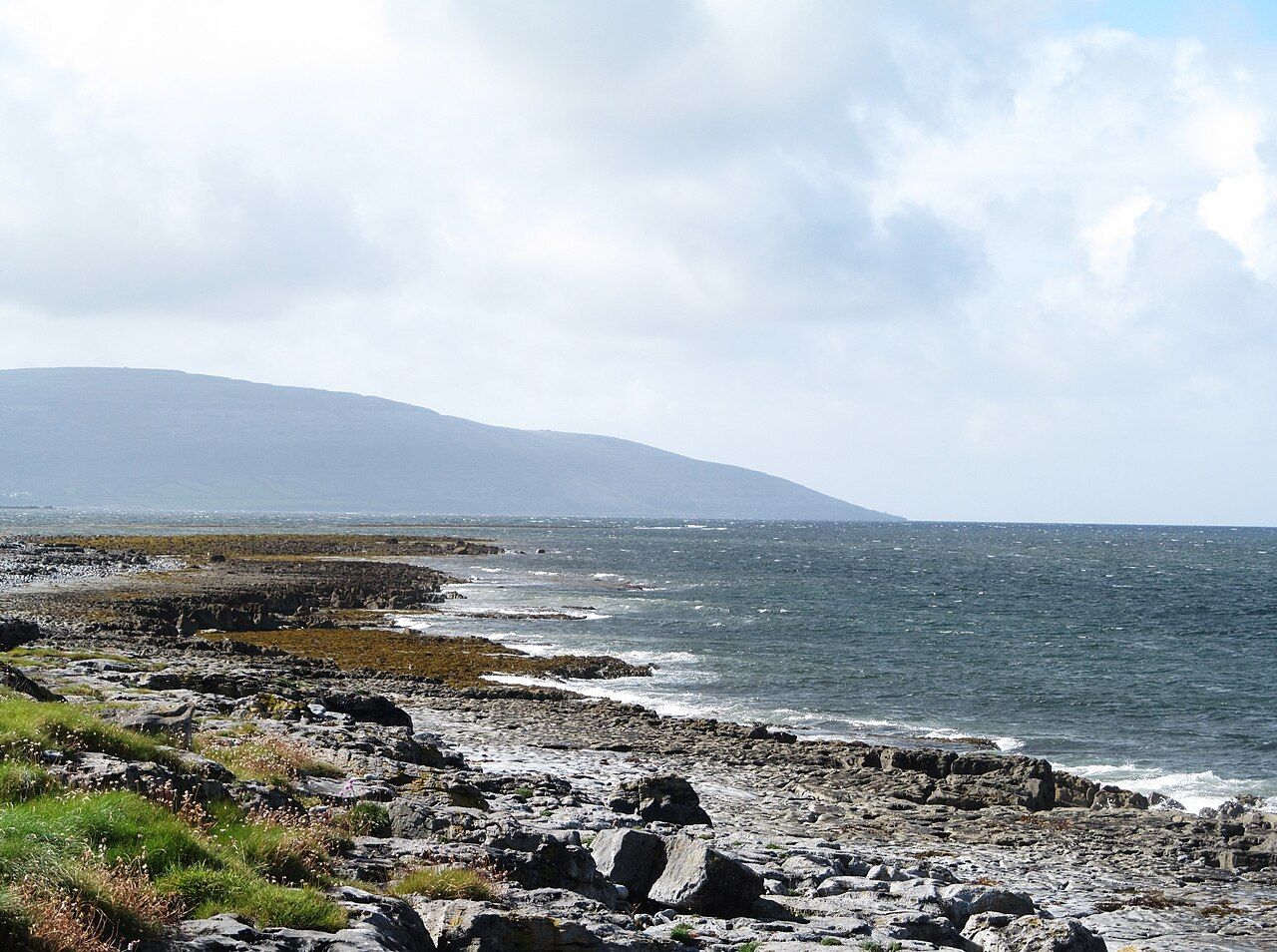
Treat the rock with care. Wet limestone and weed-covered ledges are very slippery, and the lower shelves can be swept by waves without warning. Stay above the wet line in rough weather, keep children close, and do not stand on the outer edge of the rock to photograph breaking waves. As everywhere in the Burren, leave stones where they lie and build no cairns or stacks along the shore.
The views reward a slow pace. Across the water to the north, the hills of Connemara can appear on clear days, and closer at hand you look back towards the terraced limestone slopes of the Burren. The light changes quickly as showers move across the bay, and few shores in the region show that change as clearly.
Lough Muree and its birds
Lough Muree is a quiet lake just inland from the shore, its surface often perfectly still even when the bay beside it is rough. Mute swans are frequently seen here, and the lake and shore attract a range of other birds: ducks, herons and waders along the tideline. In winter, geese and wading birds feed along the coast of Galway Bay, and the shore is a good place to watch them with binoculars from a respectful distance.
Stay on the lane or the shore rather than walking up to the water's edge through the vegetation, and keep dogs under close control so the birds are not disturbed. If a group of swans or geese is feeding near the lane, wait or walk slowly past, giving them space.
Nearby Corkscrew Hill and the narrow roads
The poem and the light
The Flaggy Shore became widely known beyond Clare partly through literature. Seamus Heaney's poem "Postscript" is set along this coast, and many people walk the lane because of it. Reading the poem before or after a visit is the best way to experience it; it captures something of the wind, the water and the swans more vividly than any description of the place could.
Autumn is a particularly fine time to come. The sun sits lower in the sky, the light is warmer, and on a clear day after rain the limestone, the lake and the bay can take on a bright, almost silvery quality. The changes in light between showers are part of the appeal: one moment the water is dark grey, the next it shines. Late afternoon tends to bring the best of this, though the light can shift at any hour.
Spring and early summer bring a different reward. The grassy verges and the rocks above the tideline carry many of the flowers covered in the spring flowers of the Burren, and the long evenings allow a walk in soft light after dinner.
Visiting well
The lane along the shore is narrow, with very few places to pass and almost nowhere to park. People live here, and farm traffic uses the road. If you come by car, park only where it is clearly allowed and never block gateways, entrances or passing places. Walking or cycling the lane is a better way to see it; you notice far more at a slow pace, and the distance is short.
- Respect the homes along the lane and keep noise down.
- Keep gates and entrances clear.
- Take all your litter home.
- Check the tide and weather before going onto the lower rocks.
The weather on Galway Bay changes quickly, and a calm, bright morning can turn wet and windy in less than an hour. Bring a warm layer and a waterproof even on a fine day.
Nearby
The Flaggy Shore fits neatly into a slow day on the north-eastern side of the Burren. The ruined Cistercian abbey covered in Corcomroe Abbey sits in a quiet valley a short drive inland, and the harbour village in Kinvara and Dunguaire Castle lies just across the county border to the east. On the way back west, the coast road returns you to the village and the open water described in Ballyvaughan and Galway Bay, with the hills stepping down to the bay as the evening comes in.