
Black Head lighthouse and Fanore beach
West of Ballyvaughan the road squeezes between terraced limestone and the sea, rounds a headland with a small white lighthouse, then drops to the sand and dunes of Fanore.
Ground: Shore and rocksFrom Ballyvaughan: Fifteen to thirty minutes west by carWay in: Coast road west from BallyvaughanBring: Windproof, swimwear, sturdy shoes, binoculars
The coast road
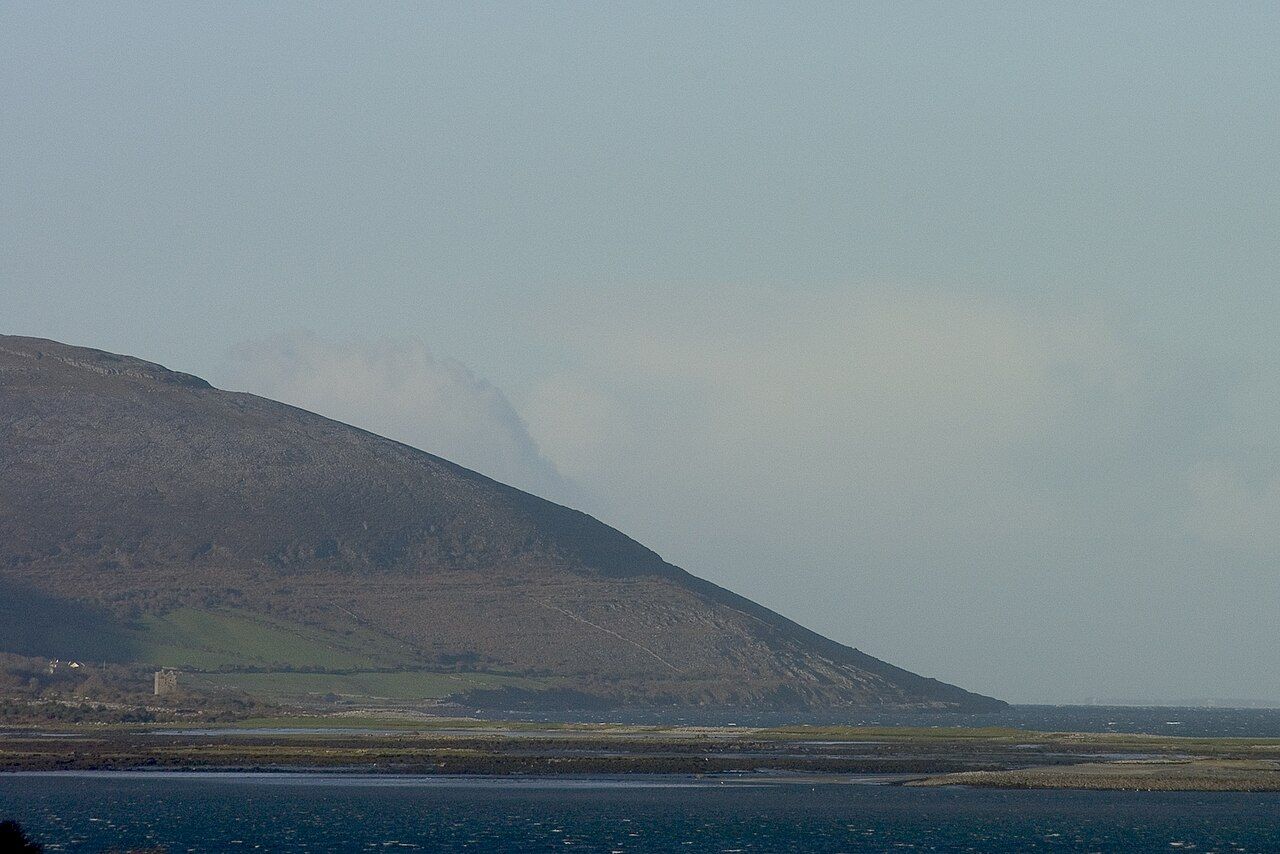
Leaving Ballyvaughan, the coast road heads west along the southern shore of Galway Bay, then turns south around Black Head, the north-western corner of the Burren. It is one of the most dramatic drives in Clare, not because it is high or steep, but because it runs so close to two very different landscapes at once. On one side the sea breaks against flat shelves of limestone. On the other, the terraced grey slopes rise steeply, bare and stepped, almost to the edge of the road.
The road is narrow in places, with stone walls hard against the tarmac, few pull-ins and sharp bends. Drive slowly, watch for cyclists and walkers, and use the small lay-bys only where it is safe to stop. Never park in a way that blocks the road or a farm entrance.
Along the way, the ruin of a tower house stands near the shore below the slopes, one of several fortified houses described in Leamaneh and the tower houses.
Black Head and its lighthouse
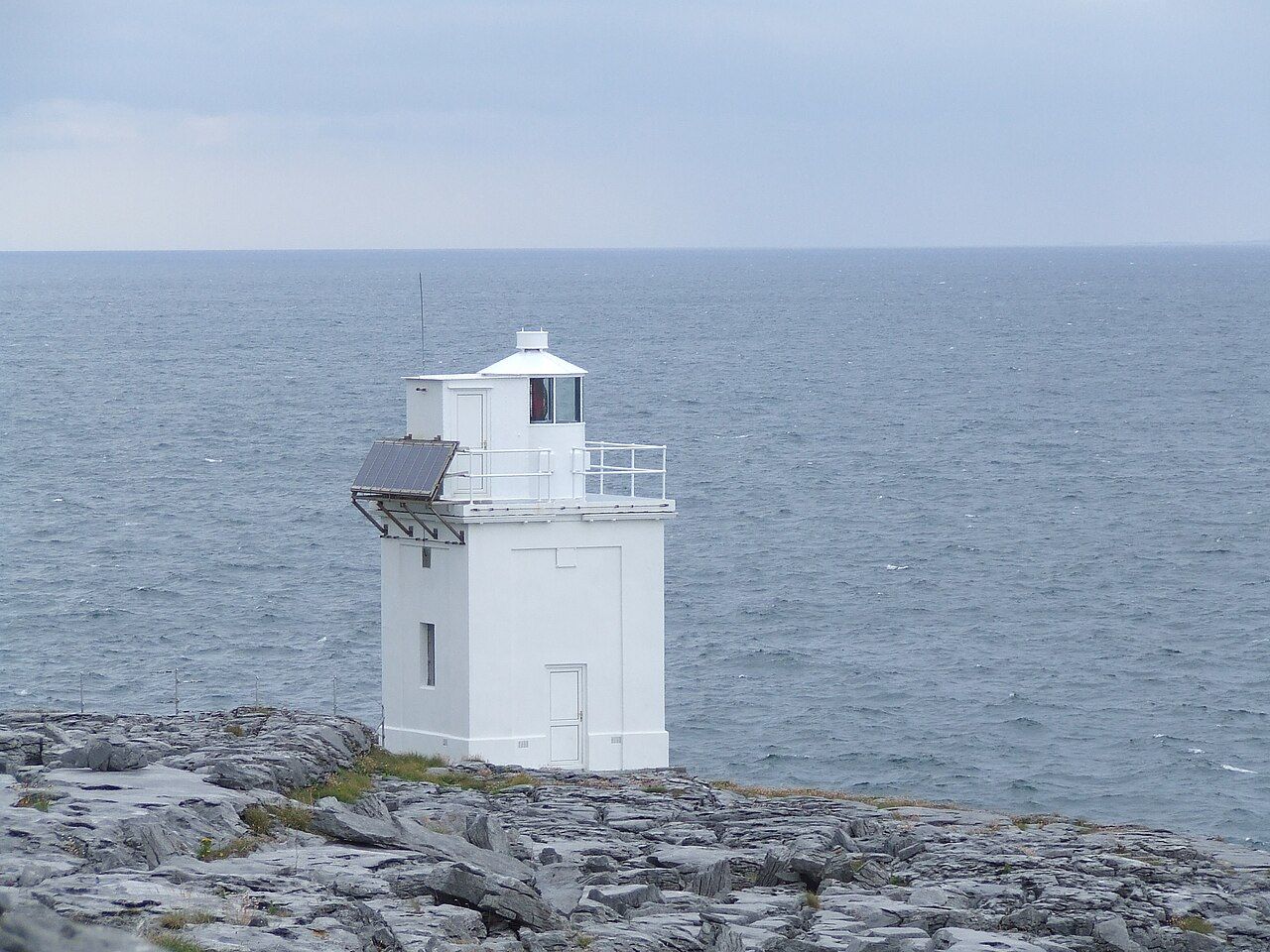
At the headland itself, a small square white lighthouse stands on the rocks below the road, looking out over the mouth of Galway Bay. It is a modest building compared with the great towers on other parts of the Irish coast, yet it marks an important turn for vessels entering the bay. You can see it from the road and from the rocks around it; there is no visitor centre or tour.
Above the road, the hill of Black Head climbs in limestone terraces, and the remains of an old stone fort lie near its summit. The slopes are mostly private farmland and the ground is rough, with grikes, loose stones and steep steps, so only climb on routes where access is clearly allowed, and ask before crossing fields.
The rocks around the headland are a good place to watch the sea. In calm weather you may see seabirds feeding offshore, and seals are sometimes seen along this coast. In rough weather, waves explode against the ledges, and the spray can reach far higher than you expect. Stay well back from the edge of the rock, especially where it is dark and wet, which shows that waves reach it.
Shelves of rock and the Aran view
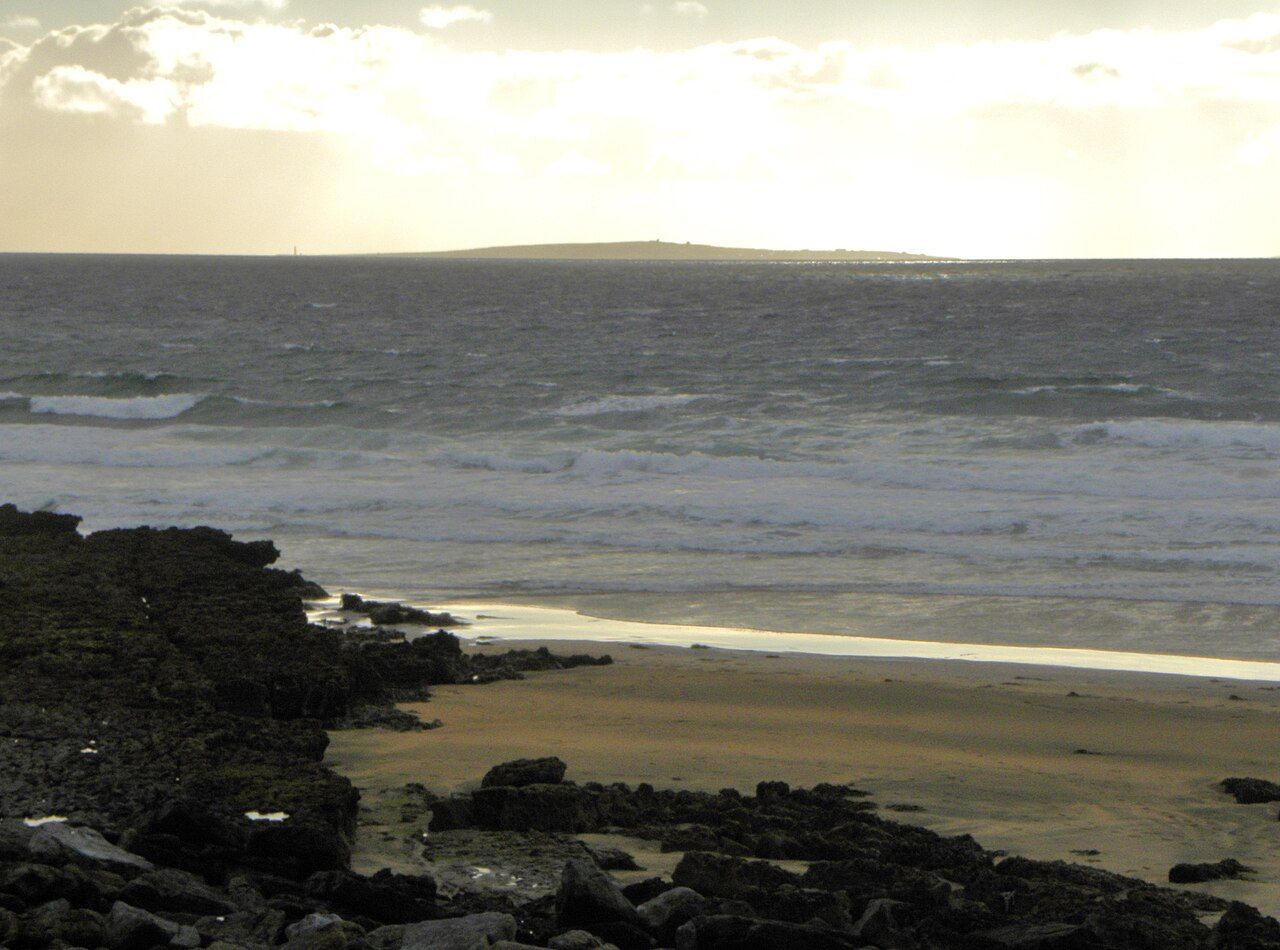
South of Black Head the coast faces the open Atlantic. The limestone runs down to the sea in wide, flat shelves, scored with grikes and dotted with pools. On clear days the Aran Islands lie low on the horizon to the west, the same limestone continuing beneath the sea to form them.
These shelves are popular with anglers and walkers, but they are dangerous places in a swell. Large waves can arrive without warning, even on calm days, and wash across rock that looked dry moments earlier. Watch the sea for several minutes before going down onto the rock, keep well above the wet line, and never turn your back on the waves.
Nearby Walking the Burren Way
Fanore beach
A few kilometres further south, the coast opens into a bay of golden sand at Fanore, backed by dunes that are rare on this rocky coast. The Caher River, often described as the only river in the Burren that runs entirely above ground, reaches the sea nearby after flowing down its valley from the hills. The beach is a popular spot in summer for families, walkers and surfers.
The dunes are fragile. Marram grass holds the sand together, and trampling breaks it down, leading to erosion. Use the paths through the dunes rather than climbing over them, and do not light fires or camp on them.
Swimming and surfing with care
Fanore draws surfers, and its waves make it one of the better-known surfing beaches on the Clare coast. That also means conditions can be dangerous for swimmers. Rip currents form near the river mouth and the rocks, and they can carry even strong swimmers out quickly. The Atlantic is cold in every season.
- Swim only when lifeguards are on duty, between the flags.
- Stay out of the water in large surf or strong onshore winds.
- If caught in a rip, do not swim against it; swim parallel to the shore until you are free, then head in.
- Keep children within arm's reach in the water.
- In an emergency at sea, call the emergency number and ask for the Coast Guard.
If you want to try surfing, take a lesson with a qualified instructor rather than heading out alone, and use a wetsuit suited to cold water.
On towards Doolin
The coast road continues south from Fanore towards Doolin and Lisdoonvarna. A loop that runs round Black Head to Fanore, then back over the hills via the spa town described in Lisdoonvarna, the spa town, makes a full day with plenty of stops. You could equally continue to the village and pier covered in Doolin and the view to the Aran Islands.
Late afternoon and evening are often the best time on this coast. The light lies low across the bay, the hills turn gold and grey, and the sea glows as the sun drops towards the islands. Before setting off, check the forecast: the weather can change quickly, and the road round the headland can feel very exposed in a storm. On the drive back to Ballyvaughan and Galway Bay, the lights of the far shore begin to show across the water.