
Leamaneh and the tower houses of the Burren
A roofless mansion by a crossroads, a fierce legend, and two smaller towers near Ballyvaughan. The tower houses tell of lords, land and a world of feuds.
Ground: Road and pathFrom Ballyvaughan: Around twenty minutes south by carWay in: R480 south past Poulnabrone to the junctionBring: Binoculars, a camera, patience with traffic
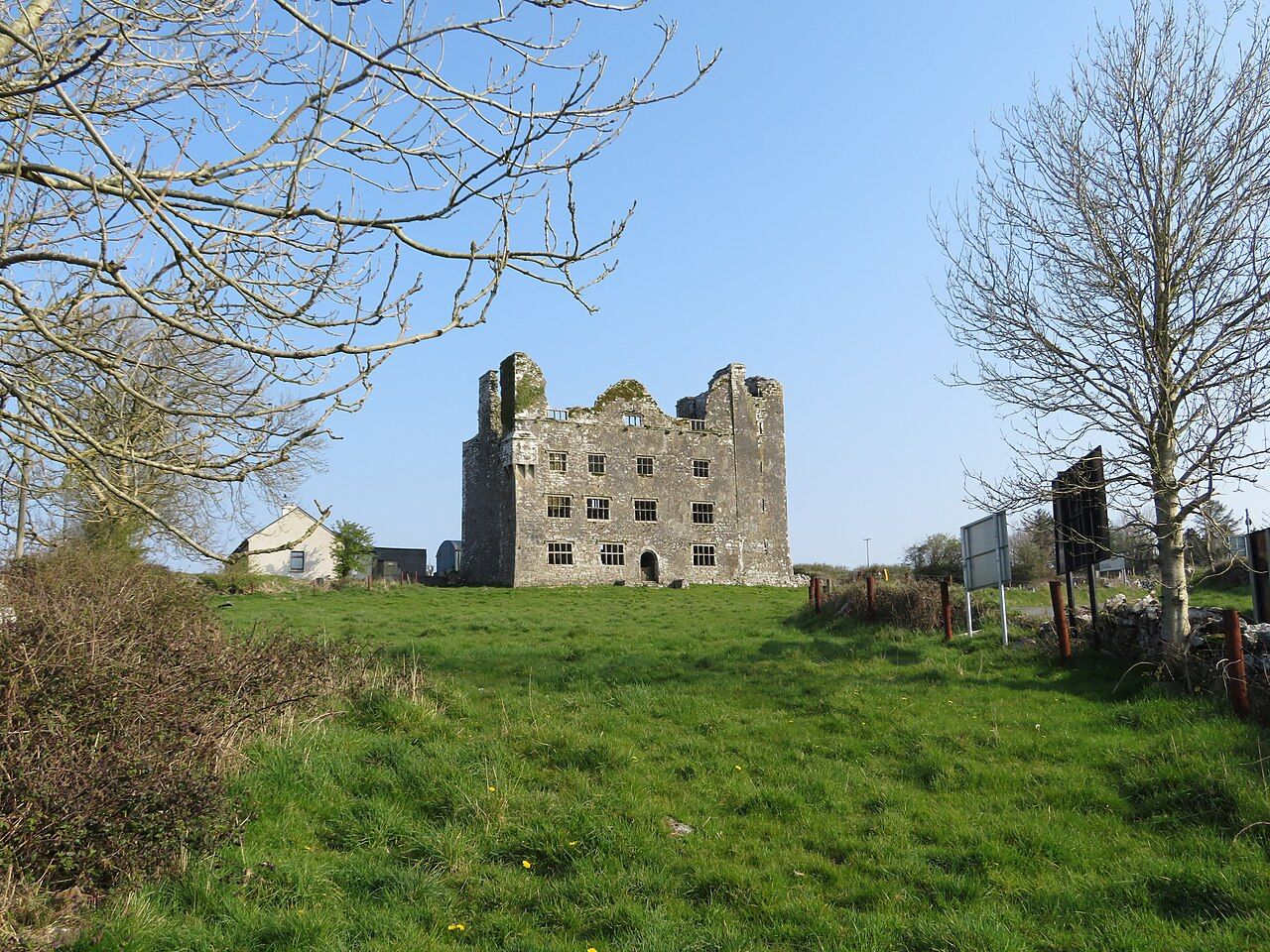
Drive south across the high Burren on the R480 and, as the road comes down towards the junction with the R476, a large grey ruin appears in a field beside the road. Rows of tall window openings, a broken roofline, a narrow tower at one end: this is Leamaneh Castle. It is one of the most recognisable buildings in Clare, and one of the best places to understand how the great families of the area lived in the centuries before the modern state.
A tower that grew into a house
Leamaneh began as a tower house, the kind of tall, thick-walled stone dwelling built in large numbers across Ireland from roughly the fifteenth century. Tower houses were homes for local lords: compact, defensible, with a room or two on each floor stacked one above another, and often a walled yard, called a bawn, at the foot.
In the seventeenth century a later generation of the O'Brien family added a larger house against the tower, with big mullioned windows across several storeys. It was a sign of changing times. Defence still mattered, but so did comfort, light and show. The result is the long, many-windowed building you see from the road, with the older tower still visible at one end.
The legend of Máire Rua
Leamaneh's fame rests as much on a story as on its stones. The woman at the centre is Máire Rua, Red Mary, wife of Conor O'Brien. Local lore makes her a fearsome figure. The tales say that she married many times and disposed of husbands who displeased her, that she hanged servants from the windows, and that she was finally sealed inside a hollow tree by people she had wronged.
These are legends, and they should be read as legends. They grew and changed in the telling, and many details do not match the records. What history supports is a smaller and more human story: her husband was killed in the wars of the mid seventeenth century, and she worked hard, including through a later marriage, to keep the family lands for her son in a time of confiscation and upheaval. That alone took nerve.
It is easy to see why the legend took hold. The house is large, gaunt and visible for miles, and a ruin like that invites stories. Generations of travellers passing the crossroads would have heard some version of the tale, and each teller added a flourish of their own.
The gap between the two versions is part of the interest. Stories about strong women in difficult times often turned them into monsters, and Leamaneh is a good place to think about how memory and fact drift apart.
Seeing it properly
Leamaneh stands on private farmland, and the buildings are in an unstable condition. View it from the roadside, and do not climb walls or gates to get closer. The best views are from the lay-bys and verges near the junction, where you can see the whole length of the house against the sky.
- Pull in only where it is safe; the junction is busy in summer and the road is narrow.
- Use binoculars to pick out the window mouldings, the tower and the remains of chimneys.
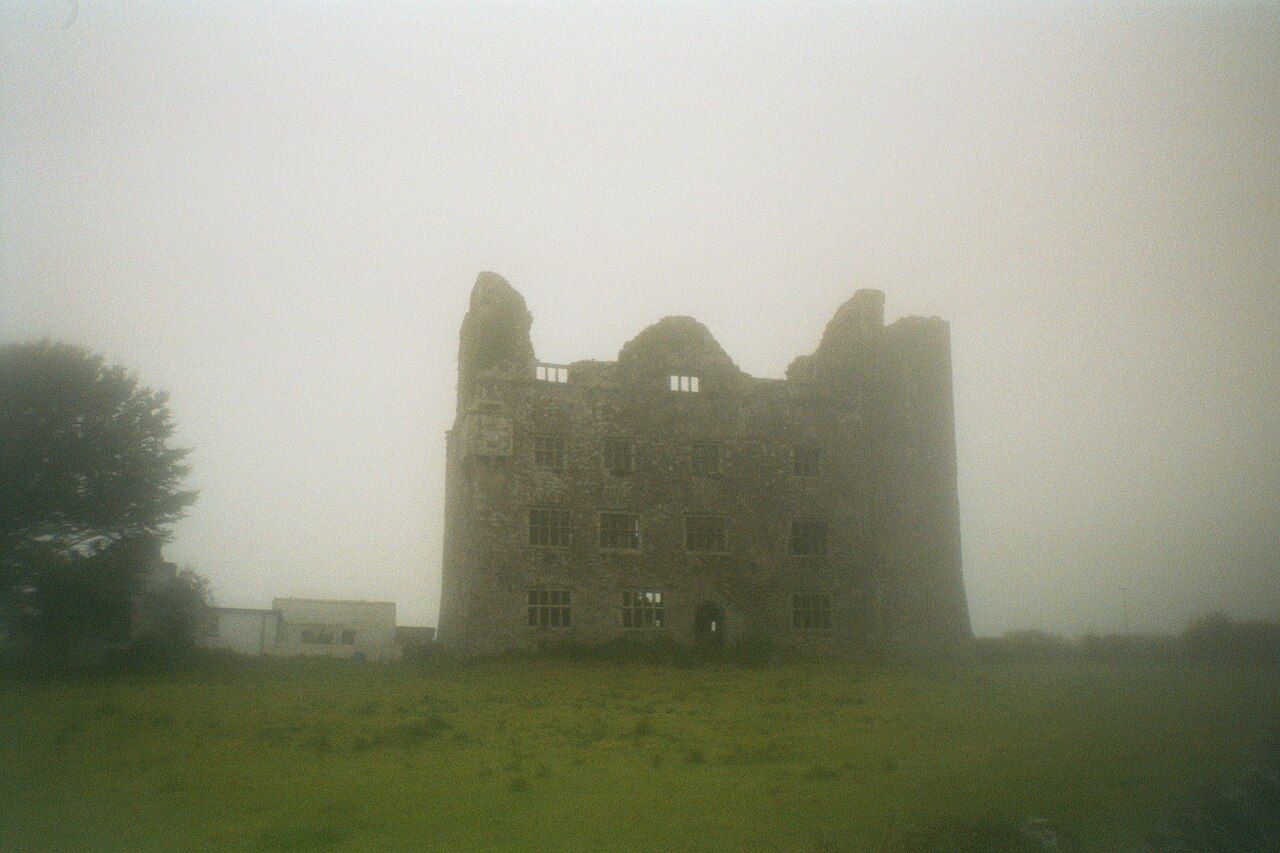
- In fog or low cloud the ruin can look very different, and the mood suits the legend.
Nearby Poulnabrone: the stone table on the pavement
Newtown Castle near Ballyvaughan
Closer to Ballyvaughan, at the foot of Corkscrew Hill, stands a very different tower. Newtown Castle is a round tower house rising from a square, sloping base, an unusual design in Ireland. It dates from the sixteenth century and is linked with the families who held this part of the Burren at the time. It has been restored, and at times visitors can see inside.
The castle stands close to the main road at the bottom of the valley, so it is easy to fit in on the way to or from the hills. The round form is unusual enough to make the trip worthwhile. Look at how the base flares out, which made it harder to undermine, and how the round walls above rise from the square below.
Gleninagh, on the shore
West of Ballyvaughan, on the coast road towards Black Head, stands Gleninagh Castle, an L-shaped tower house set back from the shore, with the bay behind it. It is tall and plain, with small windows and a stair tower, and its setting near the water is lovely, especially on a still evening.
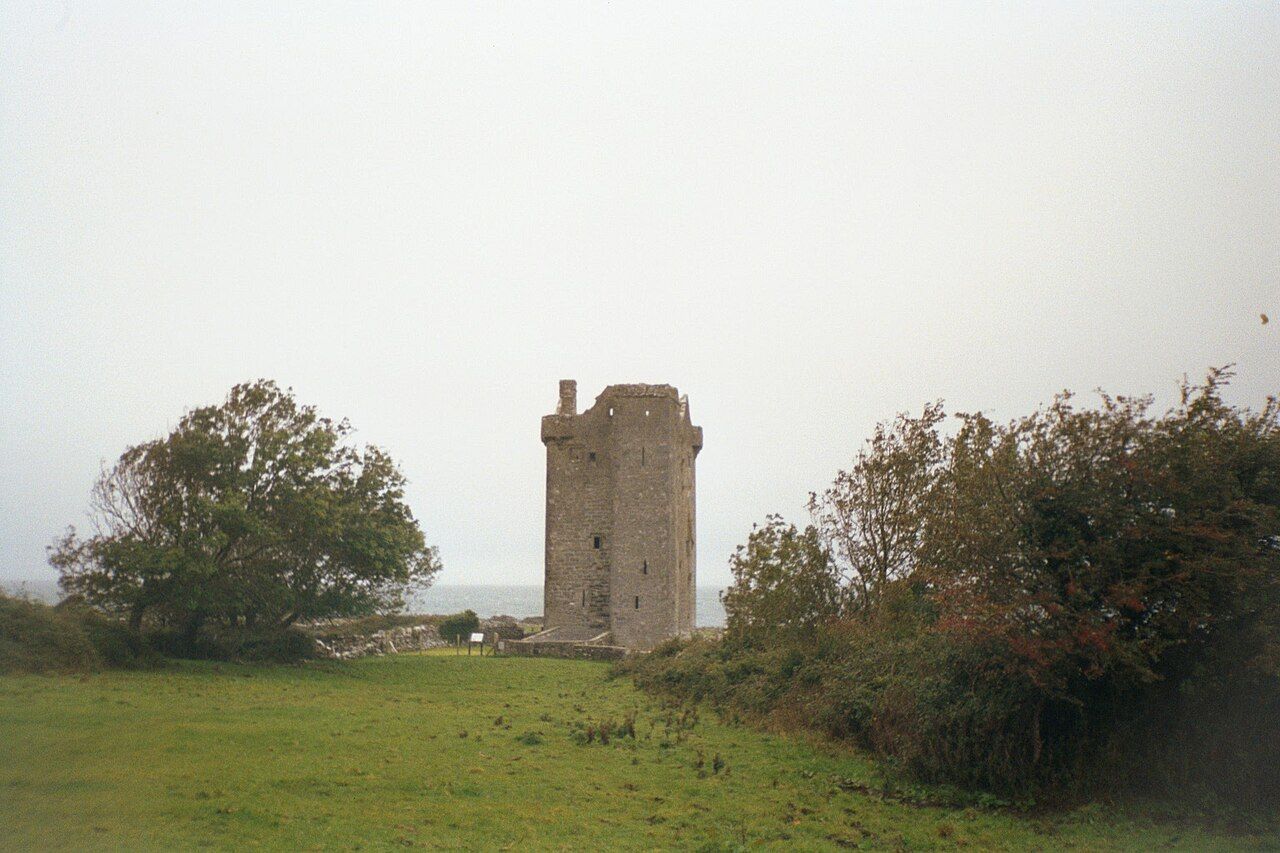
Gleninagh is on private land; view it from the road or public paths, and do not enter fields without permission. The coast road beyond leads to the lighthouse and beaches described in our guide to Black Head and Fanore.
Reading tower houses
Once you have seen these three, you will notice more tower houses across the Burren and its edges, many ruined and standing alone in fields. Some features to look for:
- Narrow slit windows on lower floors and larger windows higher up, where the main rooms were.
- A spiral stair in a corner or a separate stair turret.
- Machicolations, projecting stone boxes at the top through which defenders could drop missiles.
- Traces of a bawn wall around the base.
Tower houses tell of a world of local lordship, cattle wealth and frequent feuds, a period that sits between the forts described in our guide to the Burren's stone forts and the big houses and estates of later centuries. Seeing Leamaneh, Newtown and Gleninagh in one day gives a good sense of how varied they could be, from a defensive tower to a mansion with ambitions.