The spring flowers of the Burren
In May the grey limestone turns into one of the great flower shows of western Europe, with plants of the far north and the warm south growing a few steps apart.
Ground: Grassy and roughFrom Ballyvaughan: Flowering verges within minutes by carWay in: Verges, pavement edges and waymarked trailsBring: Hand lens, field guide, camera, kneeling mat
A meeting that should not happen
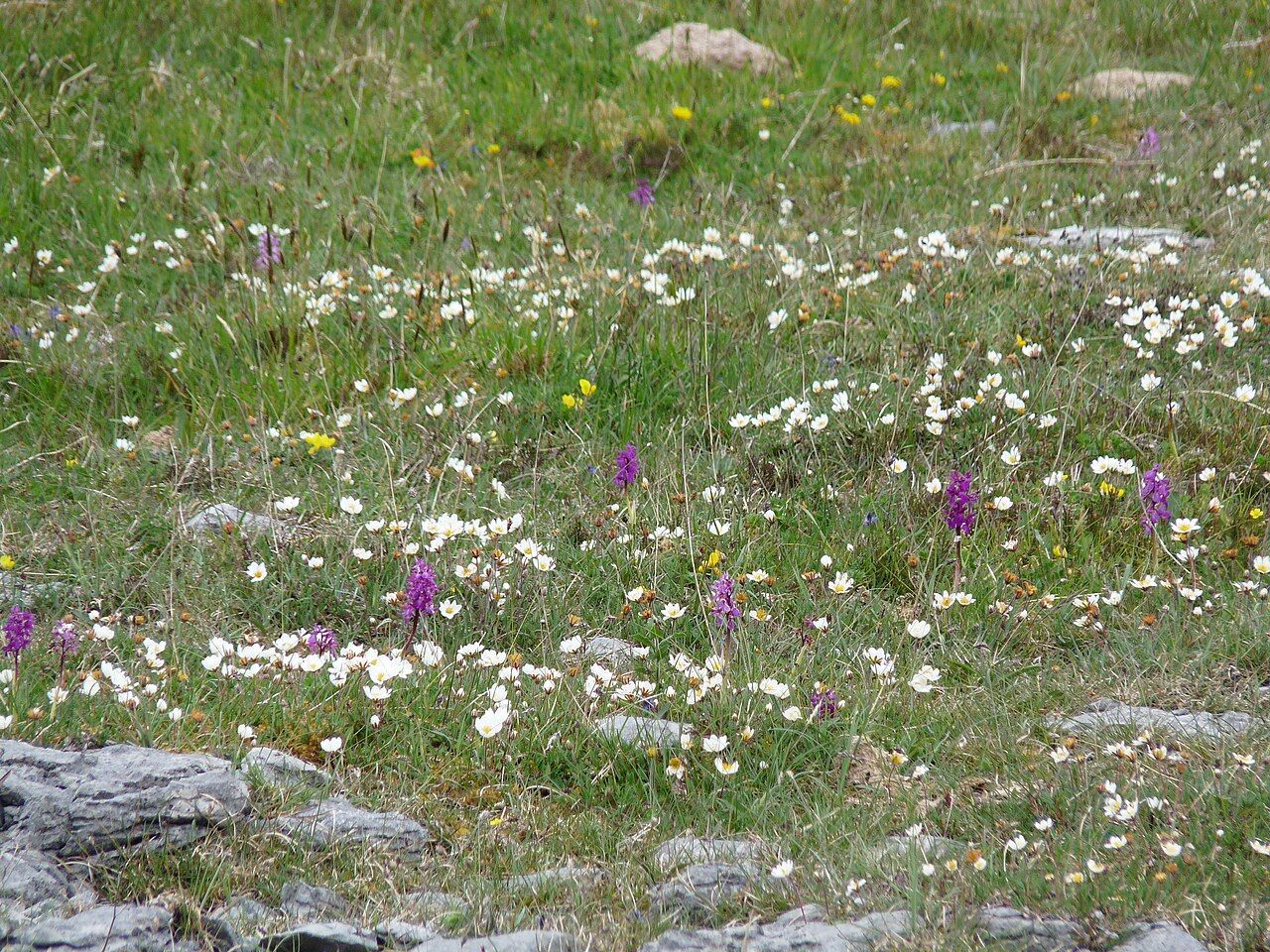
The Burren's fame among botanists rests on an unlikely mixture. Plants that usually grow on high mountains or in the Arctic flower here close to sea level, beside species whose main range lies around the Mediterranean, while woodland plants grow out in the open among the rocks. Mountain avens, a plant of cold, exposed places, carpets slopes a short walk from the shore. A few metres away you may find dense-flowered orchid, a species with a mainly southern European distribution. No single explanation accounts for all of it, but several conditions work together.
The climate is oceanic: winters are mild and hard frosts are uncommon, so plants from warmer regions survive. Summers are cool and the open, largely treeless ground suits northern and mountain species that cannot cope with tall, crowding vegetation. The limestone absorbs warmth during the day and gives it back slowly, and the thin, lime-rich soils hold back the coarse grasses that dominate richer land. Grazing, above all the old practice of winter grazing on the hills, keeps scrub and rank growth in check. Together these conditions produce a range of plants that is unusual anywhere in Europe.
The flowers, roughly in the order they open
Spring gentian
The first great sight of the year is a blue so intense it hardly looks real. Spring gentian has five petals spread in a star at the end of a short tube, and it grows low in short grassland between the rocks. In Ireland it is found mainly in and around the Burren. It usually opens from around mid-April into May, and the flowers close in dull weather, so a bright spell is the time to look.
Mountain avens
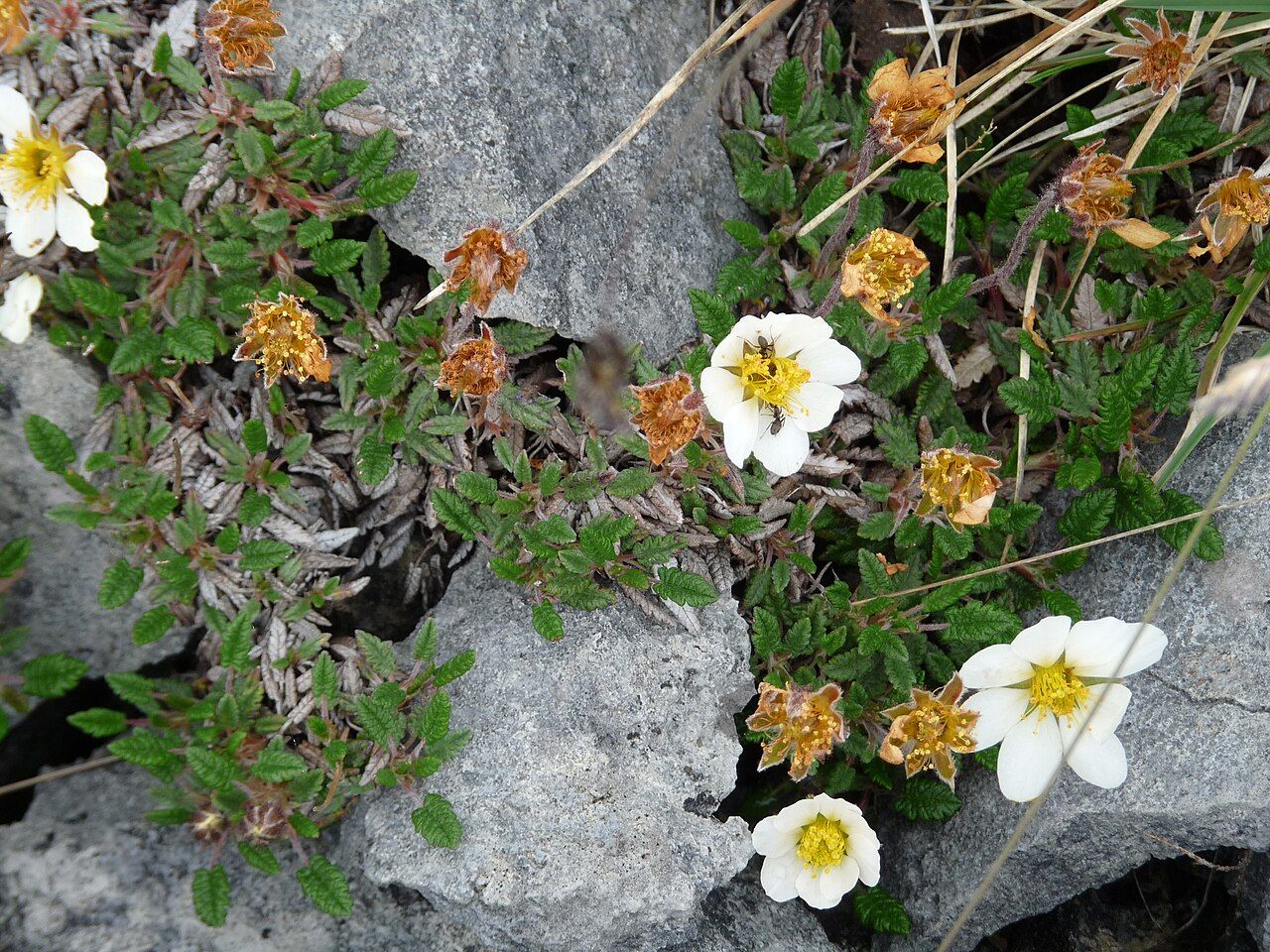
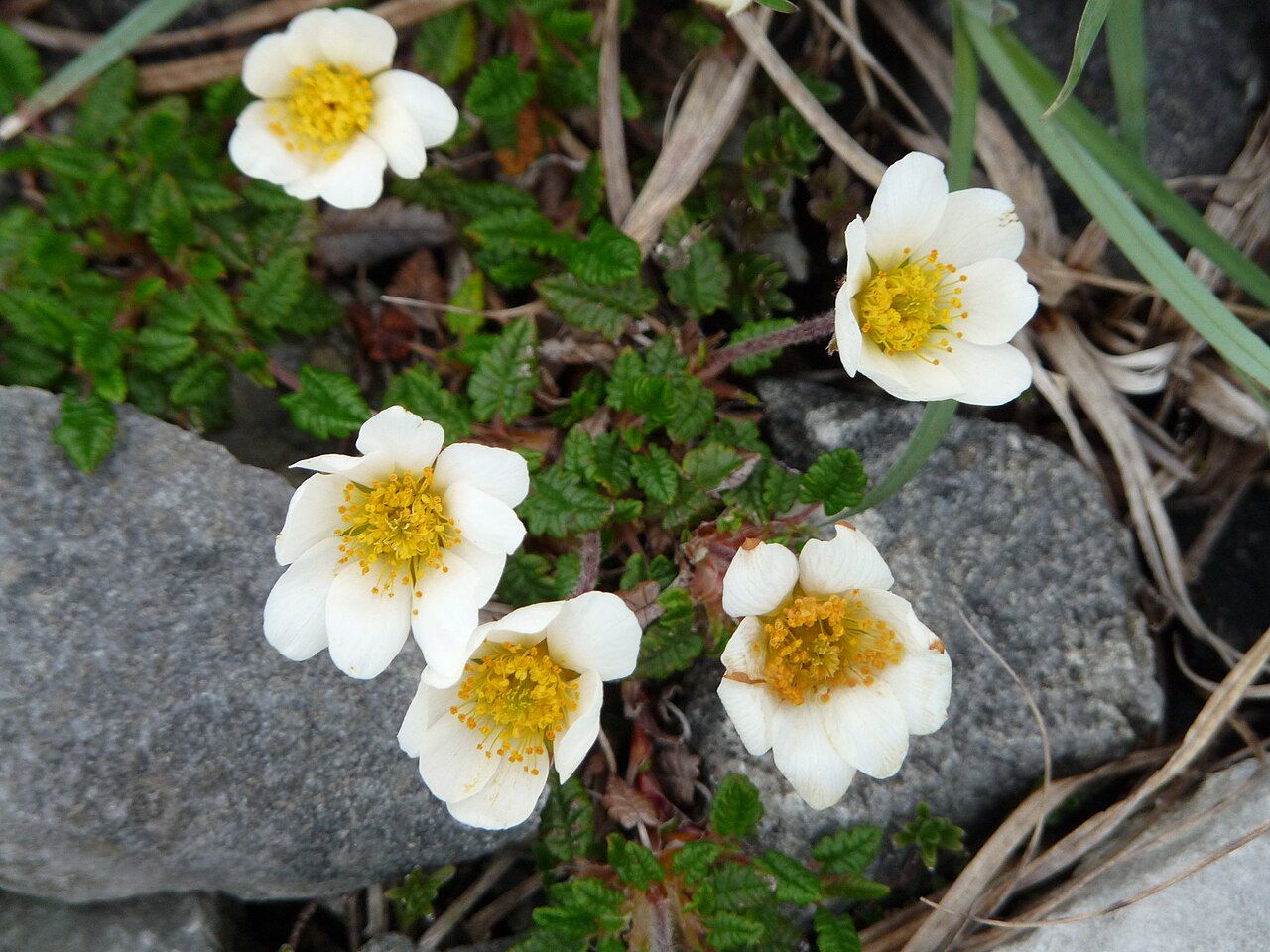
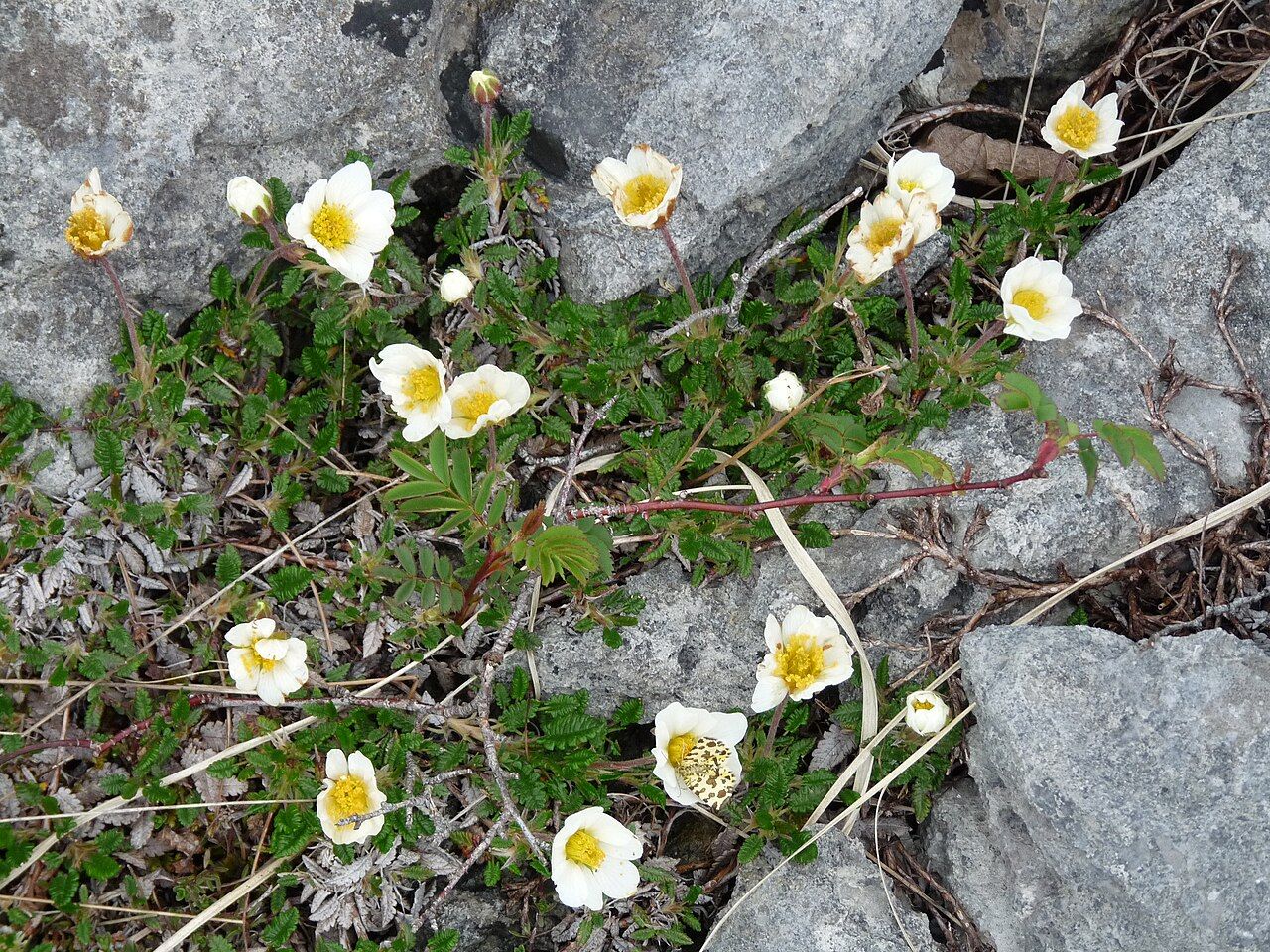
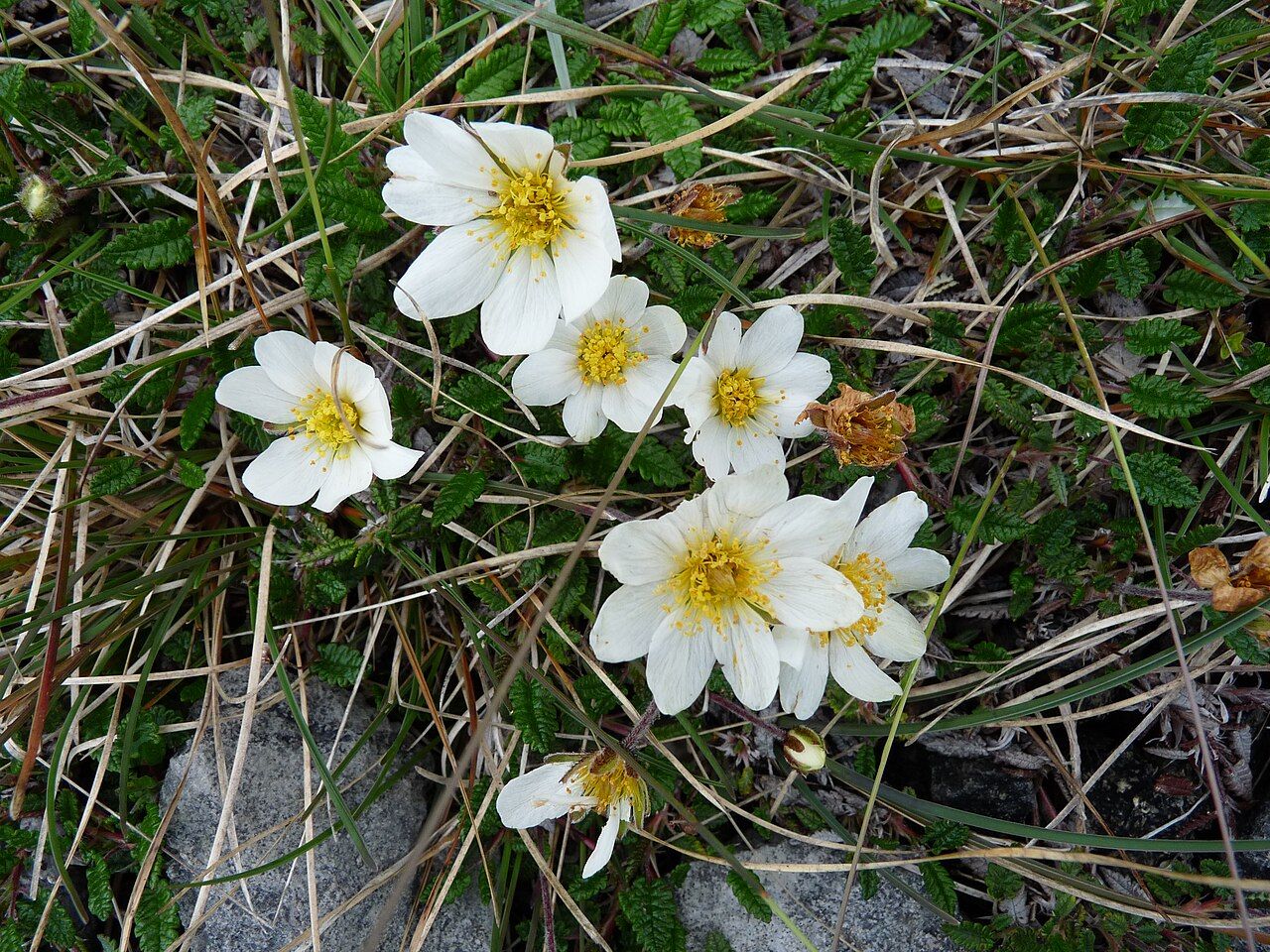
By May the white flowers of mountain avens appear across pavement and thin grassland, often in broad mats. Each flower has eight or more petals around a yellow centre, and the small leaves are scalloped like miniature oak leaves, dark green above and pale beneath. Once flowering is over, the seed heads develop long feathery plumes that twist together and catch the light in early summer.
Orchids
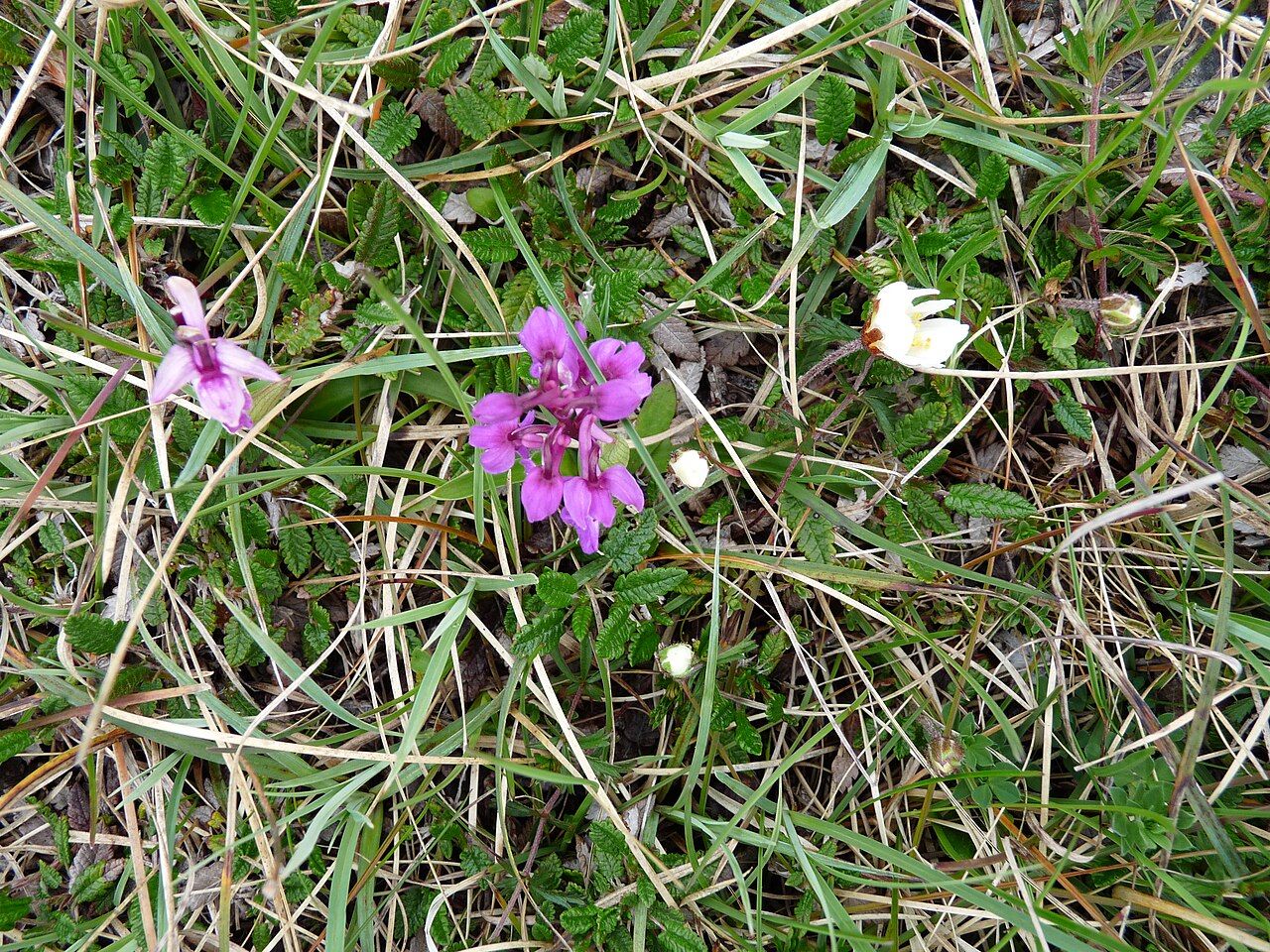
The early purple orchid is among the first to bloom, sometimes in April, and from then into high summer a long run of species follows. Look for the small, insect-like flowers of the fly orchid, the more famous bee orchid, the dense-flowered orchid and several fragrant and spotted kinds in grassland and on road verges. The Burren holds a large share of all the orchid species native to Ireland, which makes it a place where enthusiasts return year after year.
Bloody cranesbill and later flowers
From late May the deep magenta of bloody cranesbill, a wild geranium, lights up the pavement and its margins, and it often keeps flowering well into summer. Hoary rock-rose adds small yellow flowers on rocky ground, burnet rose spreads its creamy blooms over low tangles of stems, and wild thyme forms scented purple cushions. Later still come harebells, knapweeds and the seed heads of the grasses.
When to go
For the broadest variety, plan around May. Late April and early May suit the gentians and the first orchids; mid-May to early June usually brings the mats of mountain avens at their best; June is good for bloody cranesbill and many of the later orchids. Every season runs differently, though. A cold spring can hold the flowers back by a couple of weeks and a warm one can bring them on early, so allow some flexibility if you can.
Nearby Corcomroe, the abbey of the fertile rock
A grey day is not wasted. The flowers are still there, the light is soft for photographs, and there are fewer people on the trails. Just remember that gentians stay closed without sunshine, and that the limestone becomes slippery when wet.
Where to look
You will see flowers almost anywhere with thin soil and short grass, including the road verges around Ballyvaughan and the edges of the green roads that cross the hills. The pavement terraces explained in the limestone pavement guide are worth exploring slowly, since many plants grow in the grikes and in the shelter of the clints. The waymarked trails of the national park around Mullaghmore pass through grassland, pavement and hazel scrub in a short distance, and the slopes near Black Head are another good area, with sea views as a bonus.
Most of the Burren is privately owned farmland. Keep to waymarked routes, public roads and areas where access is clearly welcome, and ask permission before entering a field. Close gates as you found them and leave walls undisturbed.
Slow down once you arrive. Many of the best plants are small, and they reveal themselves only to someone who stops, crouches and looks closely at a single square metre of turf. A hand lens shows the structure of an orchid flower or the fine hairs on a leaf, and a simple field guide helps you put names to what you find. Spend twenty minutes in one spot and you will often see more than in an hour of walking. Early morning and the hour before sunset bring low, warm light that suits photography, and the trails are quieter then as well.
Why the farmers matter
The flowers depend on grazing. For generations, farmers have moved cattle up onto the hills for the winter, a custom described in the story of the winterage. The animals eat down the old grass and slow the spread of hazel and blackthorn, so that light reaches the small plants in spring when the cattle have gone down again. Where grazing stops, scrub advances and the open, flower-rich ground shrinks within a few decades. Farming and conservation here are closely linked, and many farmers take part in schemes that reward them for keeping their grassland in good condition.
Where grazing stops, scrub advances and the open, flower-rich ground shrinks within a few decades.
Look, but never pick
The rule is simple: never pick, cut or dig any plant. Several species here are protected by law, and orchids in particular cannot survive being taken from the ground, since they depend on fungi in the soil. Kneel beside a flower rather than on top of its neighbours, and step on bare rock where you can instead of on the turf. Do not lie down across patches of plants for a photograph, and keep dogs from trampling the grassland.
Do not move stones to reach a plant growing beneath or beside them, and leave fallen rock where it lies. If you find something rare, enjoy it and keep its precise location to yourself rather than posting it online, which can draw crowds that damage the site. A field guide, a hand lens and a camera are all you need. The flowers will be there next spring for the next visitor, as long as everyone follows the same few rules.