
Poulnabrone: the stone table on the pavement
Three upright slabs and a tilted capstone on bare limestone south of Ballyvaughan. A guide to the tomb, what was found beneath it, and how to visit without adding to the wear.
Ground: Bare limestoneFrom Ballyvaughan: Around fifteen minutes south by carWay in: R480 south from Ballyvaughan, roadside parkingBring: Waterproof jacket, firm shoes, time for a slow look
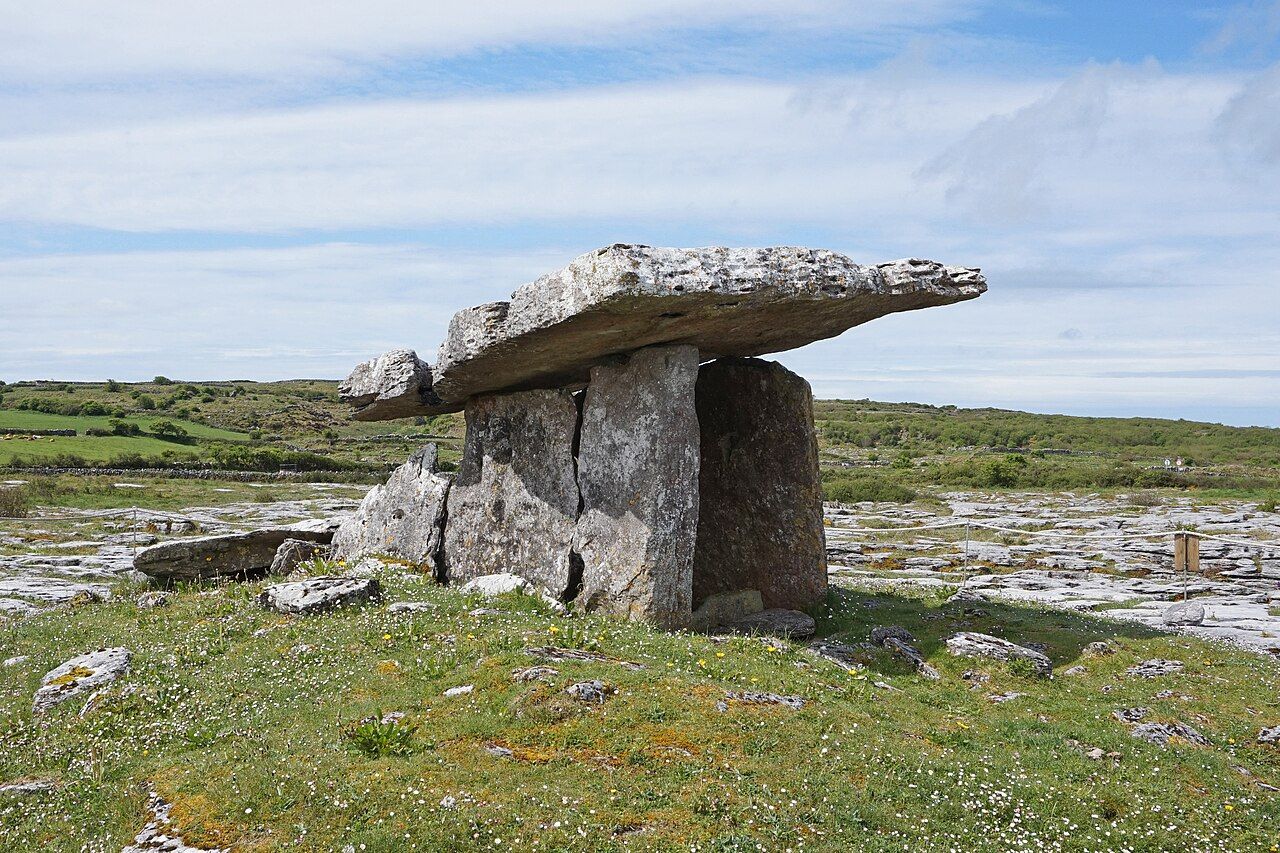
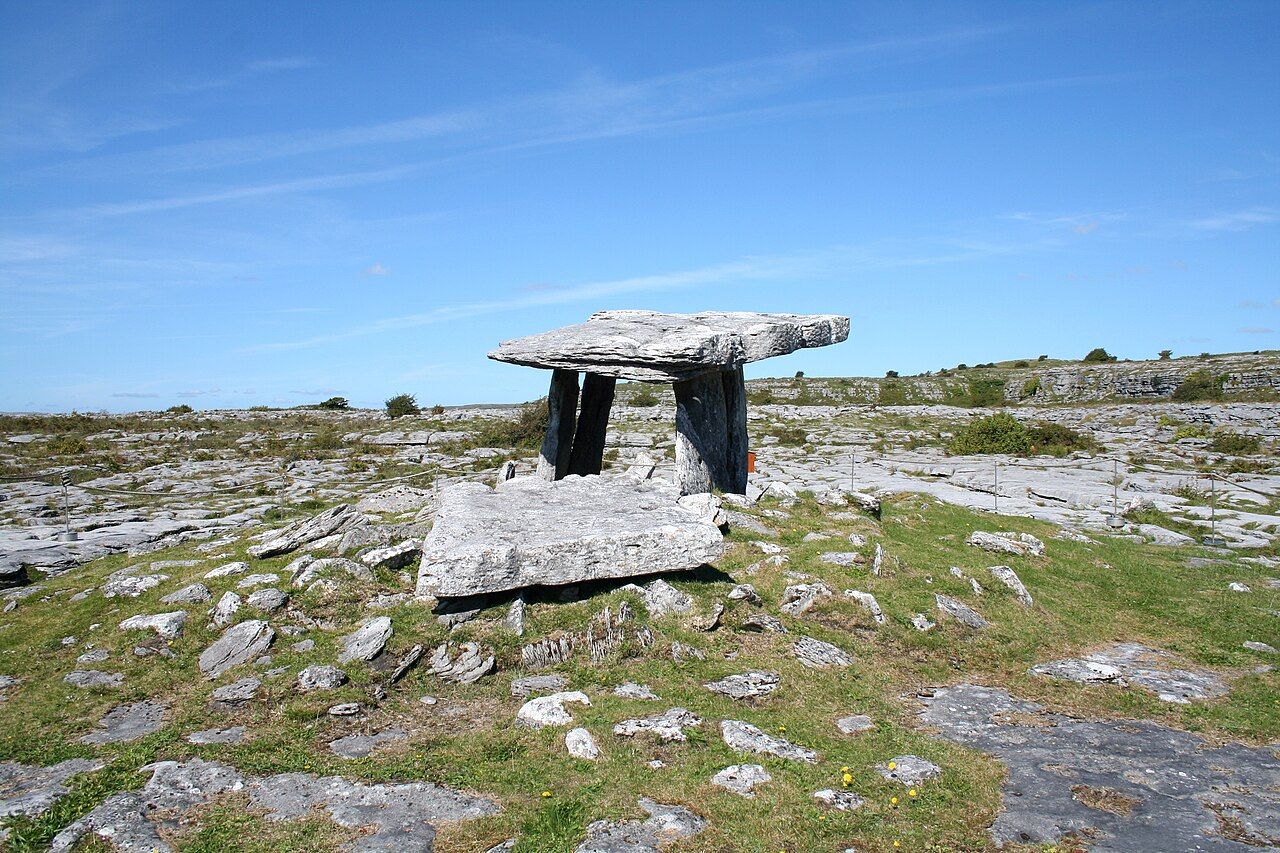
Take the R480 south out of Ballyvaughan and the country changes as the road climbs. Hazel and small fields give way to wide grey sheets of rock, the walls thin out, and the sky seems to get bigger. A little way past the high ground a group of stones appears, low against the horizon: two tall slabs at the front, more behind, and a long capstone laid across them at a slant. This is Poulnabrone, a portal tomb built by early farming people roughly five to six thousand years ago, and one of the most photographed ancient monuments in County Clare.
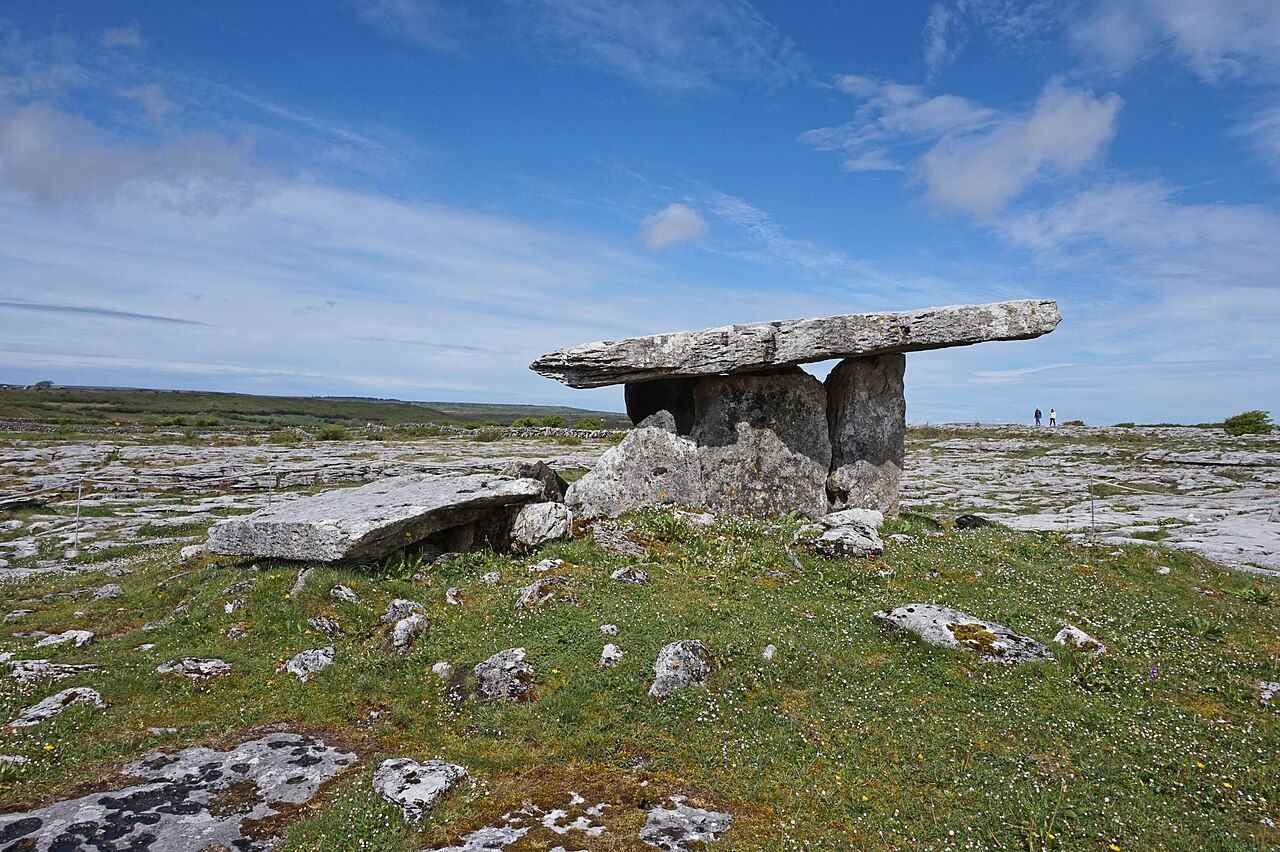
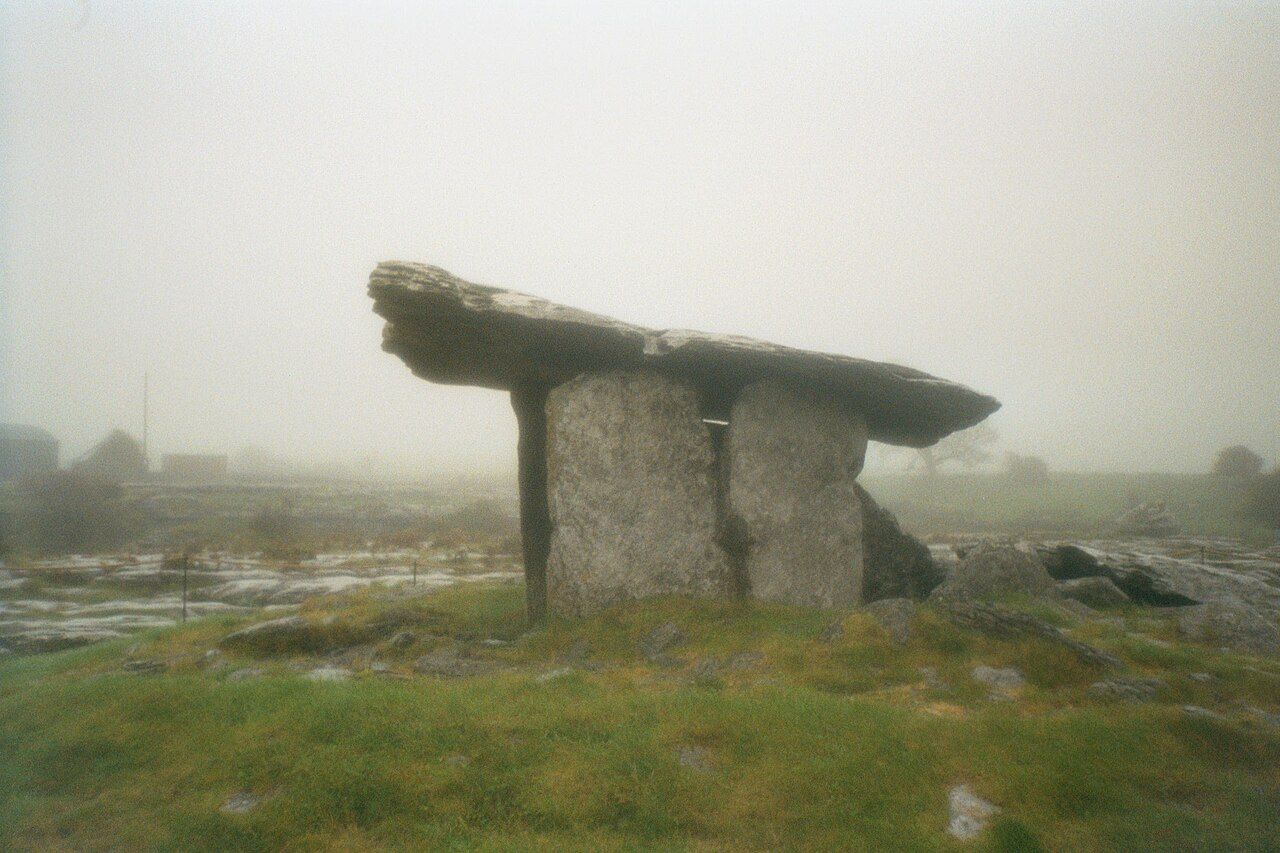
It is smaller than many visitors expect. The capstone is long and thin rather than massive, and the chamber beneath could hold only a few people crouching. What gives the tomb its force is the setting. It stands alone on open limestone pavement, with nothing taller for a long way in any direction, so the eye goes straight to it.
The shape of a portal tomb
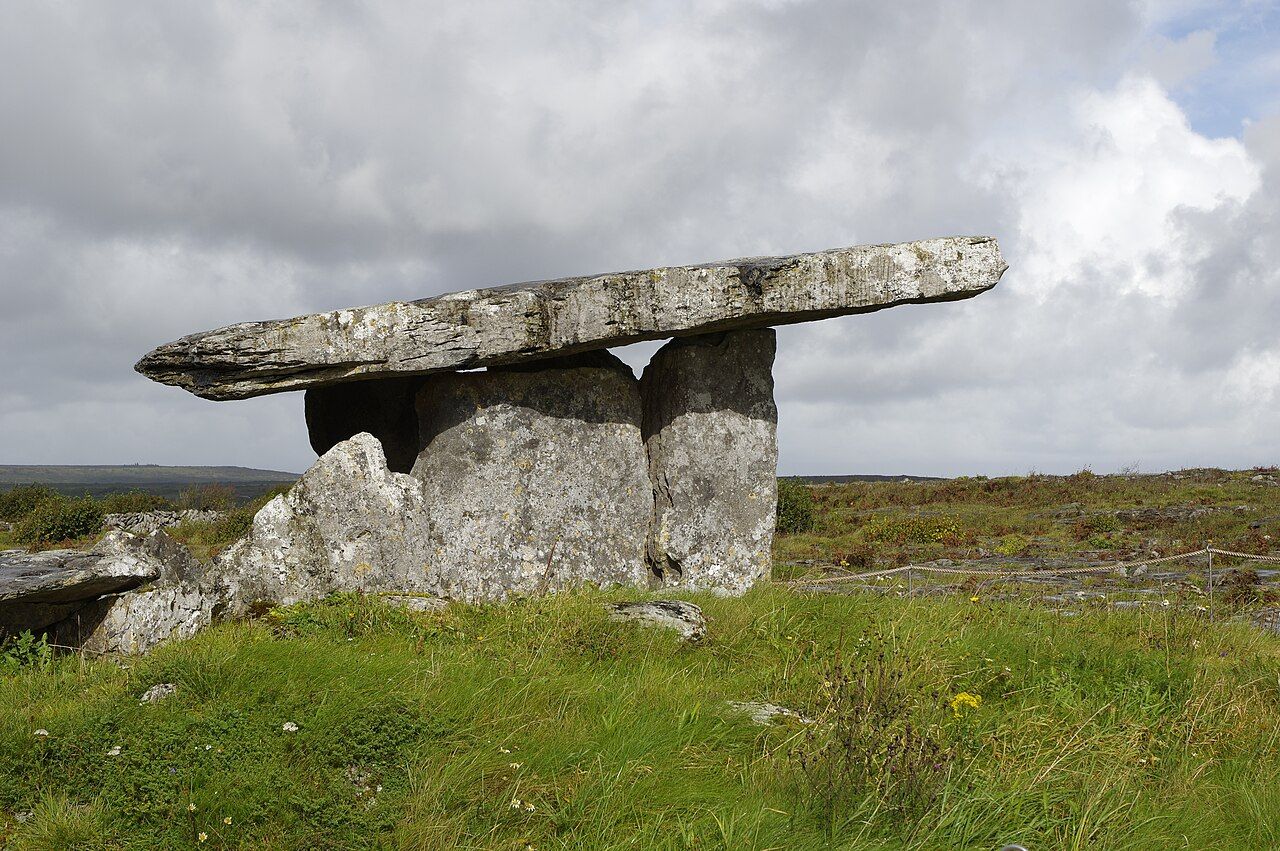
Portal tombs are among the oldest kinds of stone monument in Ireland. The basic plan is simple: two tall stones mark an entrance, a slab closes it partly or fully, side stones form a narrow chamber, and a single large capstone rests on top, usually higher at the front so that it tips back towards the rear. Poulnabrone follows that plan closely, which is one reason it turns up in so many textbooks.
Look at the base and you will see a scatter of low, flat stones around the uprights. These are usually taken to be the remains of a small cairn that once wrapped the lower part of the chamber, though it is unlikely ever to have covered the capstone. The name is commonly explained as coming from the Irish for the hole of the quern stones, a reference to the hollow and the grinding stones once used for corn, but like many place names it has more than one reading.
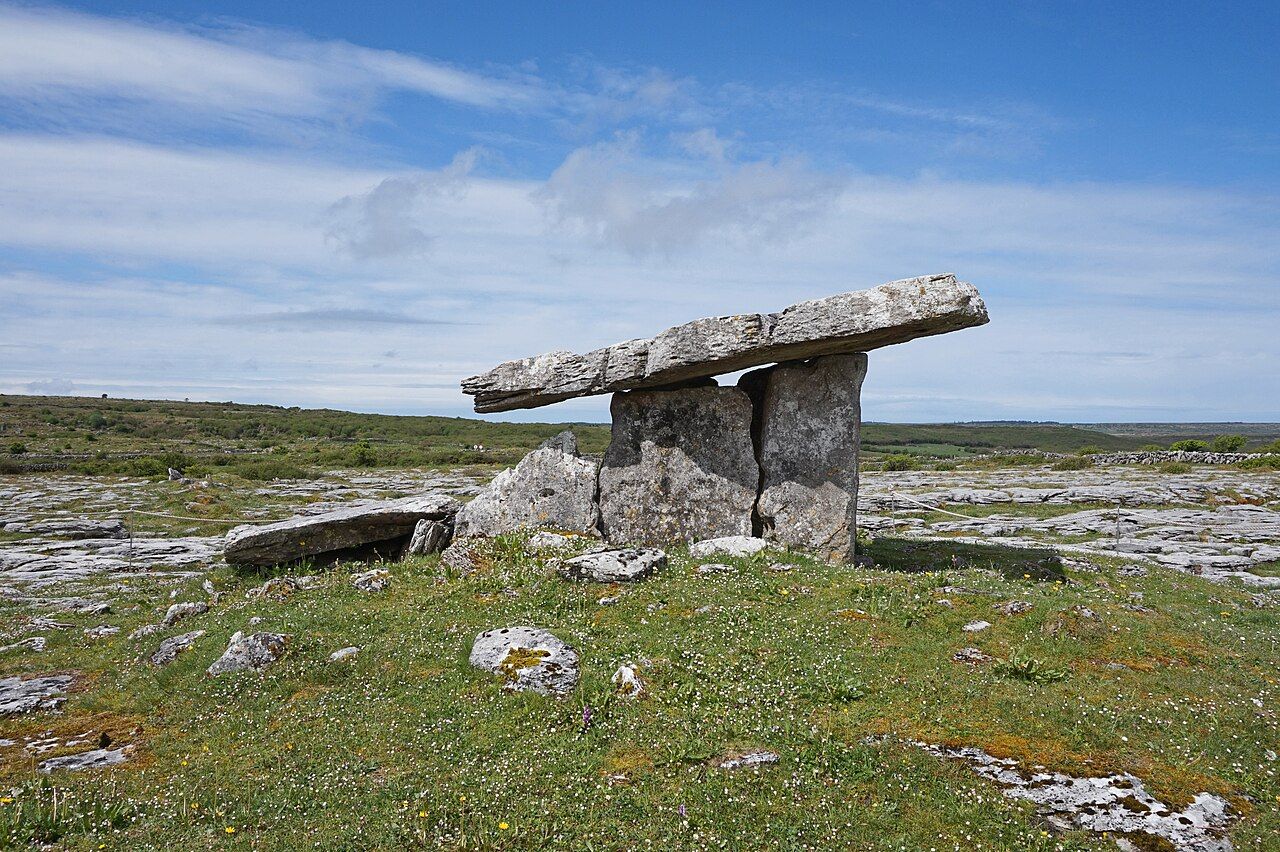
The rock itself shows you how the tomb was made. The slabs are the same grey limestone that lies all around, split along natural lines in the pavement. The builders did not need to quarry far; the material came from the surface they stood on, levered up and dragged into place by people who had only wood, rope, stone tools and each other.
What the excavation found
In the 1980s one of the portal stones was found to be cracked, and before it was repaired the tomb was carefully excavated. The work turned up the remains of many people, adults and children, mixed together and broken up in the way that is typical of tombs used over long stretches of time. Bodies seem to have been placed here, or brought here after a period elsewhere, over several centuries rather than in a single event.
With the bones lay a modest set of objects: fragments of pottery, worked stone, and a few small personal items. Nothing suggests great wealth. The impression is of a community tomb, used again and again, a place where the dead of a farming group were gathered over generations.
Studies of the remains also gave a picture of hard lives. Many of the people had worn joints and signs of heavy physical work, and few seem to have lived to what we would now call old age. Details like these are worth knowing before you walk up, because they change how the stones look.
The impression is of a community tomb, used again and again, a place where the dead of a farming group were gathered over generations.
A monument built by farmers
It helps to picture the Burren as it may have been when the tomb went up. The uplands were not as bare then. Pollen studies across the region suggest there was more soil and more woodland, and that the clearing and grazing of early farmers played a part in exposing the rock you see today. The people who built Poulnabrone kept cattle and grew cereals, and the tomb may have marked a claim to this ground as much as a resting place.
Seen that way, the monument links straight to the farming that still shapes the hills. Cattle are still brought up onto these uplands for the winter, a custom you can read about in our piece on the winterage on the hills, and the stone walls around the tomb are the work of far more recent farmers. Thousands of years of grazing lie between them and the builders of the tomb, but the line is not broken.
Nearby Walled farms of the high Burren
Other tombs of similar age and later wedge tombs are scattered across the Burren, many of them on private farmland and some barely noticeable among the rocks. Poulnabrone is the one set up for visitors, with a path and a panel, which is why it takes most of the pressure.
Visiting quietly
The tomb is reached by a short path from a parking area beside the road. A low fence keeps people back from the stones themselves. It is there for a reason: years of visitors climbing, sitting and leaning on the slabs, and of feet wearing the thin soil around them, put the monument at risk. Stay outside the fence, and keep children and dogs outside it too.
- Do not move stones, and do not build little cairns or stacks on the pavement nearby. They damage the surface and confuse anyone trying to read the real archaeology.
- Leave the flowers where they grow. The grass around the tomb carries spring flowers in season, and they are part of what makes the place worth protecting.
- Keep to the path where there is one. The pavement has deep cracks, slippery when wet, and an ankle twists easily.
- Arrangements for parking and access can change, so look out for any notices when you arrive.
Timing makes a large difference. In the middle of the day in summer, coaches and cars come and go, and the space around the fence can feel crowded. Early in the morning or towards evening you may have the place to yourself, and the low light picks out the texture of the stone. Cloudy days have their own rewards: mist shrinks the horizon and leaves the tomb standing in a pale room of its own.
Fitting it into a day
Poulnabrone sits on the main road across the high Burren, so it falls naturally into a loop. From Ballyvaughan you can drive up the R480, stop at the tomb, and continue south past other monuments to the ruin of Leamaneh, described in our guide to Leamaneh and the tower houses. From there, roads lead west to Kilfenora or east towards the lakes and the national park.
If you prefer to come down by another way, the descent of Corkscrew Hill on the N67 gives a fine view back over the bay. In late spring the verges and pavement along all of these roads are full of colour, and our guide to the spring flowers will help you put names to what you see.
Whatever route you choose, give the tomb more than a few minutes. Walk slowly around the fence, watch how the capstone changes shape as you move, and look out across the rock towards the far walls. The longer you stand there, the more the place seems to settle around you, and the less it feels like a stop on a list.